The Day I Almost Lost Connection With My Child… and How I Rebuilt It

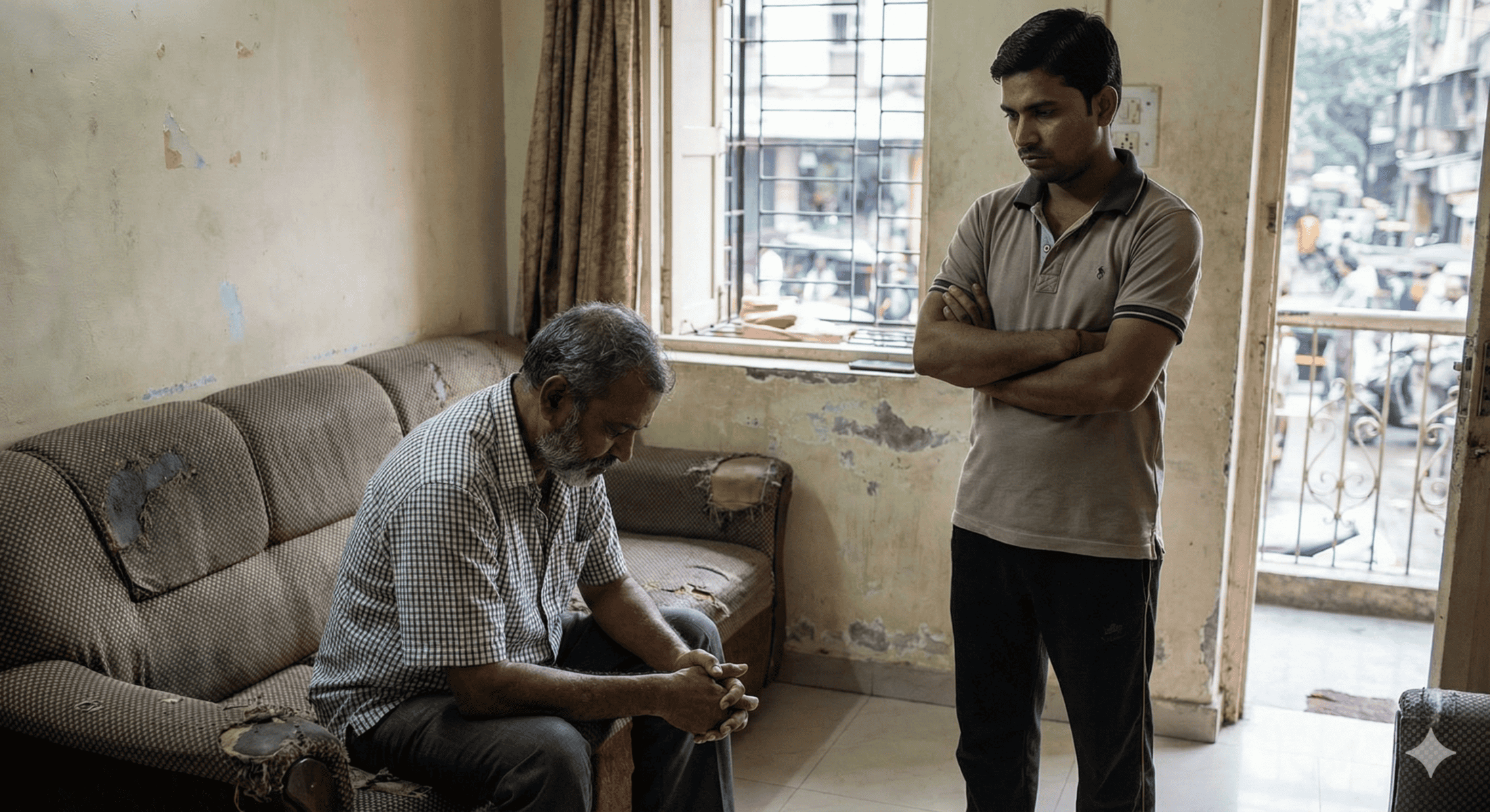
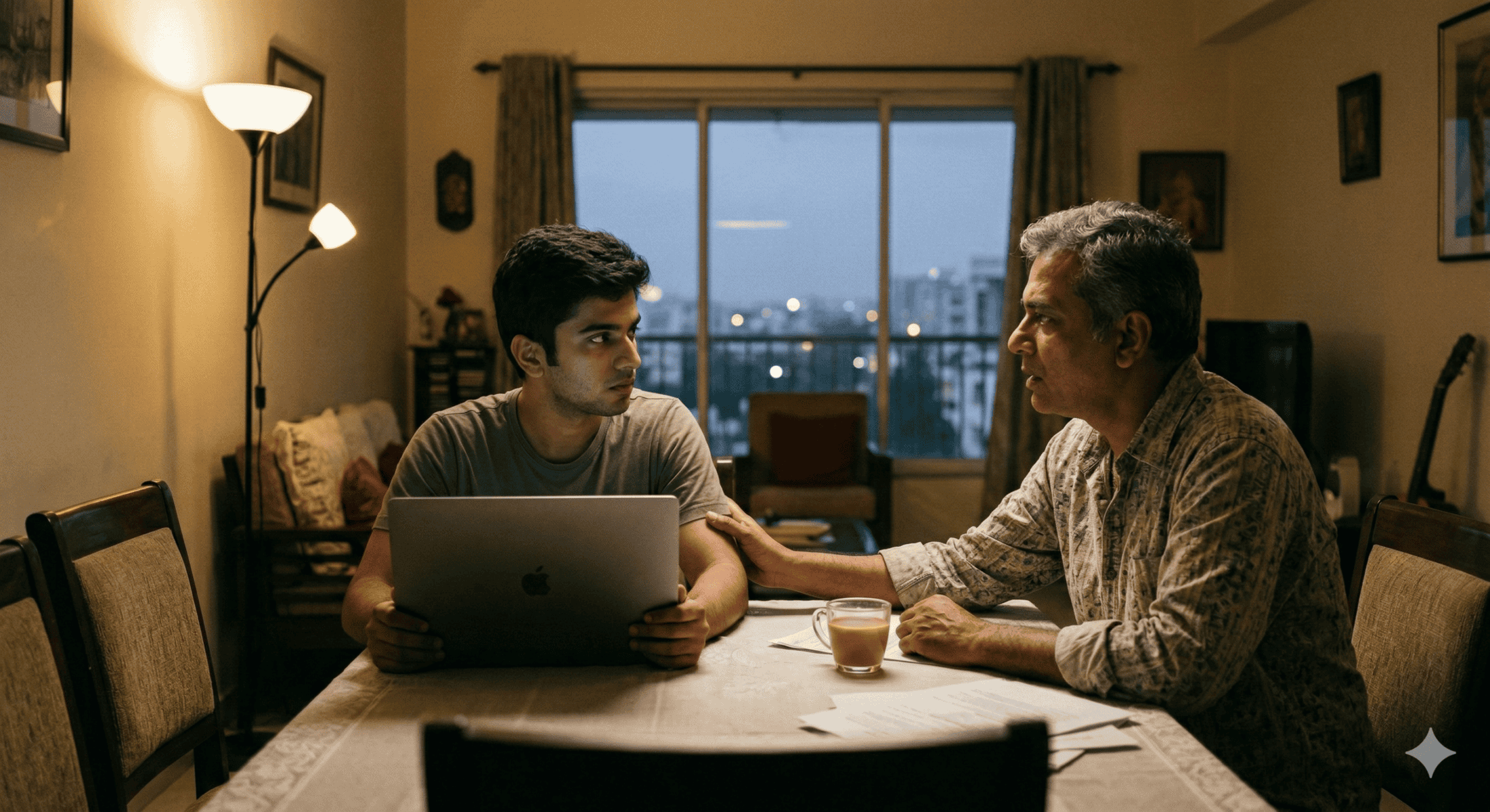
A young man sits at a dining table using a laptop while an older man sits beside him, gently holding his arm and talking. Papers and a cup of tea are on the table; the room is warmly lit with a city view visible through the window.

It was past midnight.

My son and I were shouting at each other — two voices filling the house in the dark — until I couldn’t hold it anymore and screamed: “Stop!”

The room went silent.

And the night ended there. Not resolved. Not repaired. Just… stopped.

It had started innocently enough.

Two days after my birthday, he came to me and began asking questions. About my health. About whether I was taking care of myself. About what I was doing — or not doing — for my body.

The questions started gently. And I started answering.

But as the conversation moved, I felt something shift inside me. These weren’t casual questions. They were targeted. Concerned. Persistent.

And then it happened — a flash of something in my nervous system that I didn’t expect.

I looked at my son and I saw my father.

Not literally. Not visually. But in the pattern of the conversation — the way the questions were coming, rapid, relentless, laden with expectation — my nervous system did what nervous systems do when they recognise danger.

It collapsed time.

It pulled me twenty, thirty years back — to a boy sitting in front of a man who asked questions that weren’t really questions. Questions that were measurements. Questions that meant: you are not enough yet.

And suddenly I wasn’t a father having a conversation with his son about health.

I was a child being interrogated by my father.

My throat stiffened. My heart rate climbed. A cold mix of fear and defensiveness rose in my chest — the particular feeling of being a victim who has to explain himself. Who has to justify. Who is, somehow, already wrong before he opens his mouth.

I told my son: “I don’t want you to be my father.”

It came out harder than I intended. And the moment it landed, something cracked open between us.

He raised his voice. I raised mine. What started as concern became combat. What started as love became noise.

I wasn’t fighting my son that night.

I was fighting a ghost.

But my son didn’t know that. He only knew that he came to me worried about losing me — and I responded like he had attacked me.

That night, I couldn’t sleep.

The conversation replayed itself — all the loose ends, all the moments I could have chosen differently. The places where I could have paused. Where I could have said: “I hear you. You’re worried about me. That means something.”

Instead I had heard my father’s voice in my son’s concern — and I had reacted to the ghost, not the boy in front of me.

This is what unprocessed history does. It doesn’t stay in the past. It arrives at the most intimate moments, wearing the faces of the people you love most, and hijacks the present.

I had spent years building the father I wanted to be. Regulated. Present. Safe. And in one midnight conversation, the old wiring had run the show — not because I was a bad father, but because the trigger was precise. Because the one thing I never expected was that my son’s love would feel like my father’s control.

I had confused care for surveillance. Concern for interrogation. And I had paid for it with the one thing I had worked hardest to protect: his trust.

The next morning, I went to him.

I didn’t have a plan. I didn’t have promises I was certain I could keep. I had one thing: honesty.

I said sorry for the way I responded. Sorry for being harsh. Sorry for letting the night end the way it did.

And I told him I would look at what I could do for my health. That I would come up with a plan. It wasn’t grand. But it was real — and he could tell the difference.

He looked at me for a moment.

Then he said sorry too.

And I said okay.

That was it. No long discussion. No post-mortem of every word. Just two people — a father and a son — choosing each other again after a night of losing each other.

The repair was small. But what it meant was not small.

Because repair is never really about the argument. It’s about what comes after. It’s about whether you go back. Whether you say the thing that costs you something. Whether you show your child: even when I lose myself, I will find my way back to you.

What I understand now, that I couldn’t see that night, is this:

My son’s questions came from love. Pure, worried, protective love. The love of a young man who has started to see his father not just as a parent, but as a person — someone with a body that can wear out, a man who needs looking after too.

That’s not a small thing.

That’s the reversal every father hopes for and rarely notices when it arrives — the moment your child begins to love you back, not just from need, but from choice.

And I almost turned it into a wound.

If you’re a father reading this, I want to sit beside you in this specific truth:

Your past will show up in your parenting. Not because you invited it. Because the nervous system doesn’t distinguish between then and now when the pattern feels the same.

The work is not to be someone who never gets triggered. That’s not a father. That’s a performance.

The work is to be someone who goes back. Who repairs without drama. Who says sorry without making the apology about himself.

And who, the next time his son asks him a hard question out of love, can stay in the room long enough to hear it for what it actually is.

Not surveillance.

Not control.

Not his father’s voice.

Just a son.

Worried.

Watching.

Hoping you’ll be okay.

— Santosh Acharya
The Moment I Realised My Child Was Afraid of Me

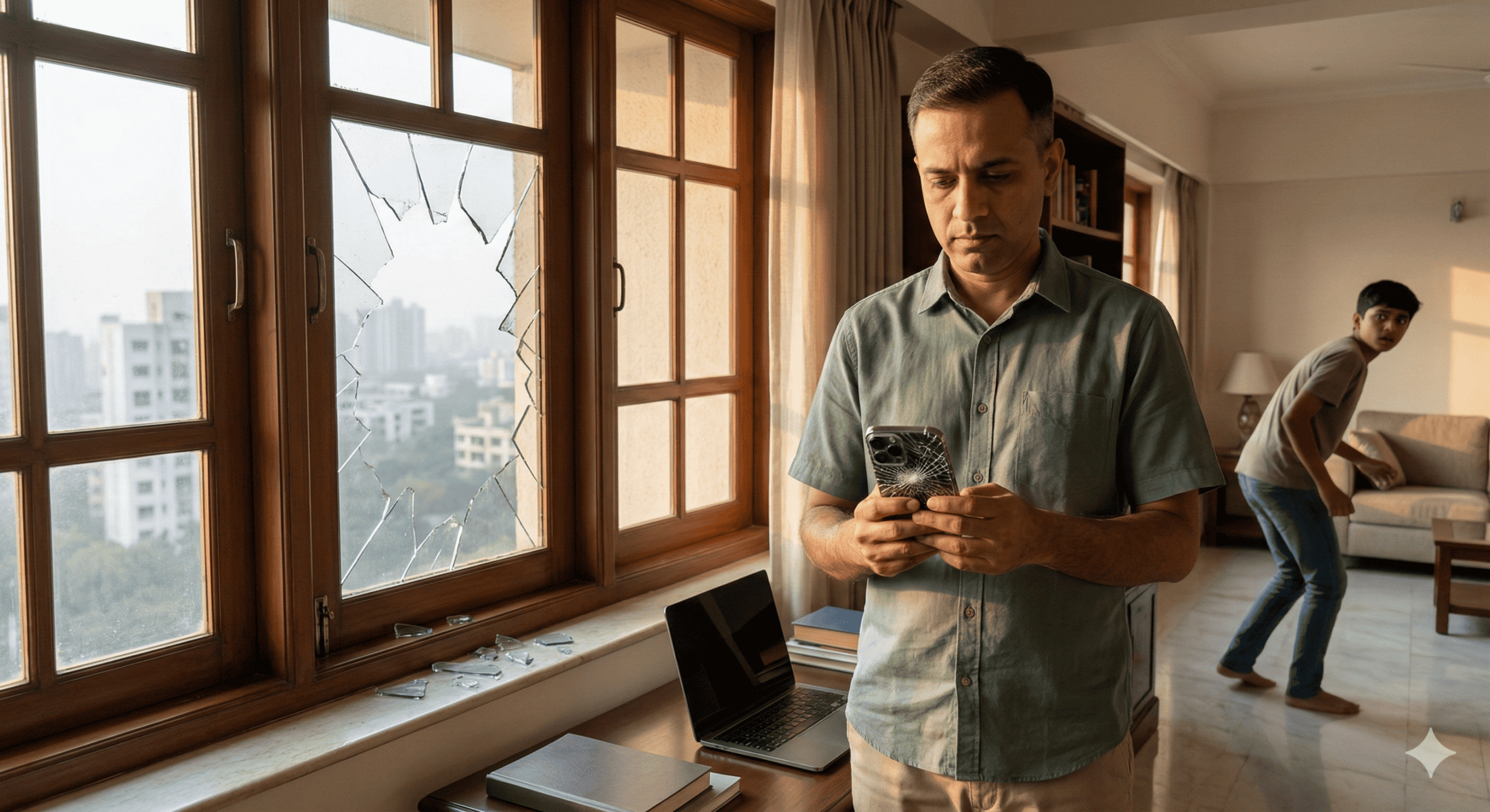
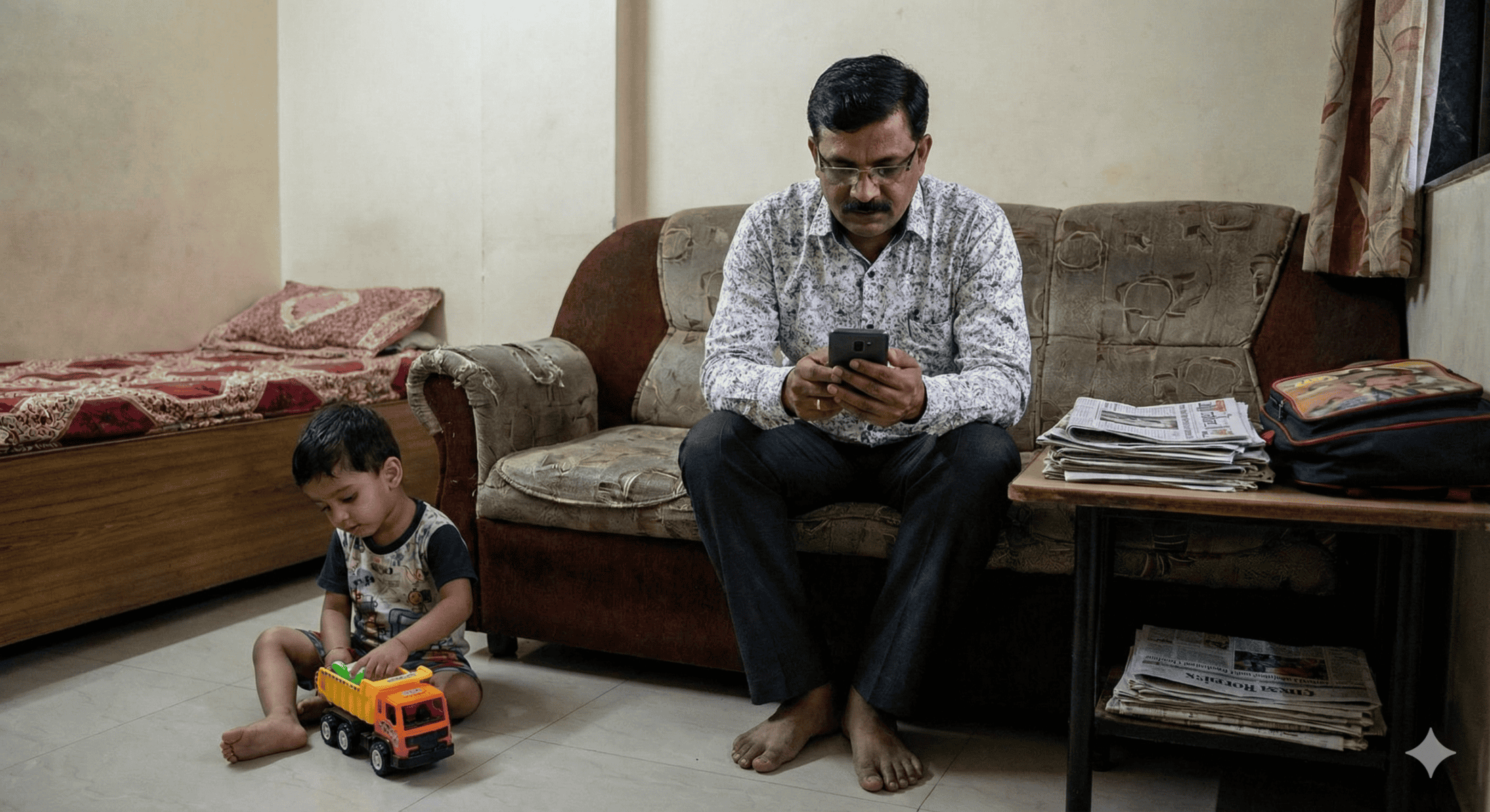
A man stands indoors looking at his phone, unaware of a burglar sneaking behind him. A broken window with shattered glass on the floor and a laptop on the desk show evidence of the break-in. City buildings are visible outside.

I walked into the house and saw my son’s body before I saw the damage.

He was standing there—fourteen, tall enough to look like a young man—but shrinking like a small child. His shoulders were curled inward. His eyes were wide and wet, like he was holding back tears. His face had too many emotions at once: anger, fear, shame, panic.

And in that second I realised something that hit me harder than any broken object in the room:

My child was afraid of me.

My wife had called me before I reached home. She told me the phone I bought just four days ago was broken. In anger, my son had thrown it, it hit the window, and the glass broke too.

We were a big family living together then—six or seven people in the same home. My parents were with us. My father’s sister was with us. There wasn’t much personal space, and my son was in that teenage phase where even small limitations feel like a cage.

He had been angry for months. Angry about what we couldn’t do for him, angry about the lack of space, angry in the way teenagers get angry when they don’t yet know how to carry their own intensity.

When I got the call, I expected myself to be furious.

But by the time I reached home, my anger had already cooled into something else: curiosity. What made him explode like this? What is he carrying?

I entered calm. No shouting. No storm.

And still—he looked at me like a storm had arrived.

That’s the part I had not understood about fatherhood until that day.

Even when a father is quiet, the child can still be terrified—because fear is not only about what is happening now. It’s also about what has happened before, what the child expects, what the child has learned to prepare for.

My wife showed me the broken phone and the broken window.

And I won’t pretend I felt nothing.

I had spent around twenty thousand rupees on that phone four days earlier. When I saw it, a sharp pain moved through my body. My throat tightened. Something pressed in my chest. My shoulders felt heavy, like they were carrying the weight of responsibility, money, effort… and now loss.

In that moment, I could feel a different version of me trying to rise.

The version that says: This is unacceptable. The version that believes anger is how you restore order. The version that thinks fear in a child equals respect.

But another thought cut through all of that:

If I explode now, I may win the moment… and lose my son.

So I paused.

Not a dramatic pause. A simple one. One breath. One decision.

I looked at my wife and said, calmly, “This mobile can be repaired. And even the window can be repaired.”

Then I called my son closer—not to corner him, but to bring him back into connection.

And I made a small dad joke: “You should have broken my old mobile. I would have bought a new one for myself.”

I saw the room change.

It wasn’t magic. It was nervous system physics. The tension dropped. My wife relaxed. And my son—most importantly—stopped shrinking. His face softened. His breathing became more normal. For the first time since I walked in, he looked like he was coming back from the edge.

Then I told him, “When you are okay, I want you to come and tell me what happened. Why this happened.”

I didn’t demand a confession. I didn’t interrogate him while he was flooded. I left him a door instead of a wall.

Later, when I sat with myself, I realised the deepest truth in that moment wasn’t about parenting technique.

It was about value.

There will be losses in a home—money, objects, things that break. But sometimes the most precious thing in front of you is not what got damaged.

It’s the person who is standing there, terrified, waiting to find out whether love is predictable… or conditional.

That day, I saw clearly: the phone had a price.

But my son had a life.

And if I taught him that his mistakes make him unsafe with me, he would stop bringing me his truth. He would stop bringing me his fear. He would stop bringing me himself.

So I chose him.

Not by ignoring what happened. Not by pretending it didn’t matter. But by deciding that repairing the relationship mattered more than punishing the moment.

I’m sharing this because I know how many fathers carry a quiet belief: “If I don’t show anger, my child won’t learn.”

But what I’ve come to believe is simpler—and harder:

A child doesn’t learn emotional strength from our intensity. He learns it from our steadiness.

If you’ve ever seen fear in your child’s eyes because of you, you don’t need more guilt. You need a new standard to hold yourself to.

Objects can be replaced.

Trust is slower.

And the day you notice your child is afraid of you can become the day you decide: fear will not be the glue that holds my family together.

It will be safety.

It will be presence.

It will be repair.

The Day I Chose My Child’s Emotional Safety Over My Ego

A man kneels on a living room carpet, hugging a young boy tightly. Both have their eyes closed, and the scene appears emotional. Large windows show city buildings outside, and the room has wooden furniture and warm lighting.

My nine-year-old was sitting on a bench outside the principal’s office, swinging his legs, not knowing what was being decided about him on the other side of the door.

Inside, the principal looked at me and said, “I want your child to apologize publicly. In front of the entire school.”

My throat closed. My chest locked. I couldn’t breathe properly for a few seconds. I just looked at her—and the room became very still.

Here’s what had happened.

My son had a fight in school. A boy had been teasing him, shaming him, trying to bully him. And in a burst of anger, my son hit him. Nothing grave. Nothing that drew blood or broke bone. A nine-year-old’s reaction to being cornered.

He came home and told me what he did.

That itself mattered to me—that he came and said it. He wasn’t hiding. He was worried about his own action. He knew something about it didn’t sit right.

And I thought: this is a teaching moment. Not for him alone. For me.

So I decided to take him to the principal. Not because there was a complaint—there wasn’t. The other boy hadn’t reported anything, likely because he knew he had provoked it. I went because I wanted to model something: when you’ve done something wrong, you face it. You don’t wait for consequences. You walk toward accountability.

I told the principal what happened. I apologized on his behalf. I thought I was doing the right thing—showing my son that a man owns his actions, even the small ones.

And then she asked for the public apology.

In that moment, two versions of me were standing in the same room.

One was the version shaped by my childhood. The version trained to obey authority without question. The version that grew up in a home where you didn’t push back, you didn’t negotiate, you didn’t say no to elders or teachers or anyone with power over you. That version wanted to nod. Comply. Keep the peace. Walk out with the principal’s approval intact—because in my conditioning, the approval of authority figures was the price of being “good.”

The other version was the father I had been trying to become. The one who had promised himself: I will not let shame be the tool that shapes my child.

And those two versions were at war inside my chest while my son sat outside, trusting me to handle it.

I knew what public apology meant for a nine-year-old. It didn’t mean accountability. It meant spectacle. It meant standing in front of hundreds of children and being marked. Not for what he did—but for who he was. The boy who had to say sorry in front of everyone. That label doesn’t wash off at nine. It sticks. It becomes a story the child tells himself about what happens when you’re honest about your mistakes.

And I thought: I brought him here to teach him ownership. If I let this happen, the lesson he learns instead is—never come forward. Never admit. Because honesty gets you punished harder than silence.

So I took a breath.

And I said, “No. It’s not possible.”

I didn’t raise my voice. I didn’t argue. I said it the way you say something when you’ve already made peace with the cost of saying it.

I told her: “It was good on my part that I came to you. I made it clear as a guardian. I’m teaching my son that what he did was not right. But what you’re asking is not accountability—it’s public shaming. And I’m not willing to do that to my child.”

Something shifted in the room after I said it.

I had walked in with my throat tight, my breathing shallow, my body bracing for confrontation. And when I finished speaking, I watched the same discomfort move to her. She didn’t respond. She didn’t push back. She just sat there, visibly uncomfortable.

I stood up. I walked out. I took my son’s hand.

He didn’t know what had been said inside. He didn’t need to. What he needed was to see his father walk out steady—not angry, not defeated, not performing. Just clear.

On the drive home, I didn’t lecture him. I didn’t say, “See what I did for you.” I didn’t turn myself into the hero of the story.

I simply told him: “What you did was wrong. You know that. But you told me the truth, and that took courage. We handled it. Now we move forward.”

That was enough.

Because the real turn for me wasn’t in the principal’s office. It was in what I recognised about myself on the way home.

My ego would have been served by complying. By being the “responsible parent” who cooperated with the school. By letting the institution handle it and walking away with the principal’s approval. That would have cost me nothing—except my son’s trust.

And I realised: for most of my life, I had confused compliance with goodness. I had believed that being agreeable with authority meant being a good man. My childhood had trained me to think that protecting yourself from authority’s displeasure was the highest priority—higher than protecting your own child’s dignity.

That day, I saw the contract clearly. And I broke it.

I’m not sharing this to say I handled it perfectly. I’m sharing it because I know how many fathers face versions of this moment—at schools, at family gatherings, in front of in-laws, in front of their own parents—and choose the path that keeps the room comfortable instead of the path that keeps the child safe.

Not because they don’t love their children. But because the old wiring runs deep. The wiring that says: don’t make a scene, don’t challenge authority, don’t be difficult, don’t be that parent.

If you’ve been in that room—any version of that room—I’ll leave you with what I now carry:

Your child will not remember whether the principal approved of you. But he will remember whether you stood between him and shame when it mattered. He will remember whether your steadiness was real or performed. And he will build his understanding of safety—not from what you told him about the world, but from what you did when the world pressed down on both of you.

Emotional safety is not a concept you teach. It is a choice you make—sometimes at the cost of your own comfort, your own image, your own need to be seen as good.

That day, I chose my child. And I’d choose him again.

The First Time My Child Saw Me Vulnerable… and I Didn’t Hide It

A man sits at a desk working on a laptop, looking thoughtful. There is a framed photo of a child, a coffee mug, and some books on the wooden desk. A window behind him shows city buildings and lets in natural light.

In 2018, I lost my mother.

Grief doesn’t always look like crying. Sometimes it looks like silence. Sometimes it looks like staring at a desk and doing nothing—because the body is present, but the heart is somewhere else, walking through old memories like they’re happening again.

That day, I was at my desk. Not working. Just… sitting.

And my ten-year-old daughter walked in.

She looked at me, studied me for a second, and said something that stopped time.

“Don’t worry. From now on… I will be your mother.”

For a moment I couldn’t respond—not because I didn’t hear her, but because I heard everything inside that sentence.

A child was watching her father in pain.

And her instinct was to fix it.

To take responsibility for it.

To become bigger than she should ever have to be.

My throat tightened. My mind went blank. And in the middle of my grief, a different kind of alarm went off inside me: If I’m not careful, she’ll turn my sadness into her job.

So I became present. Fully present.

I looked at her and said, gently but clearly:

“You don’t need to do that. You don’t need to take that role. You are more than that.”

I wasn’t rejecting her love.

I was protecting her childhood.


Later, when I reflected on it, I realised something that changed how I see families.

We make silent emotional contracts all the time.

Not on paper. Not out loud. But in moments of intensity—grief, fear, tension—someone says something, someone feels something, and without noticing it, a role gets assigned.

“I will be strong so Dad doesn’t break.”

“I will be the calm one so Mom doesn’t get upset.”

“I will never cause problems again.”

And the tragedy is: the child often keeps that contract for years… even though nobody asked them to sign it.

That day, my daughter tried to sign one.

Not because she was dramatic.

Because she was intelligent and loving—and she wanted to reduce my pain the only way she knew how.

But a ten-year-old cannot be a mother to her father.

If she tried, she would eventually pay for it with anxiety, responsibility, and an identity she never chose. And later, she might even feel like a failure for not being able to carry what was never hers to carry.

That’s the hidden cost of “sweet” moments we don’t examine.


There’s a belief many good fathers carry (and I’ve carried it too):

“If I love my children, I should never let them see me weak.”

But that’s not strength. That’s performance.

Real strength is being human without making your child responsible for your humanity.

That day, I didn’t hide my grief.

But I also didn’t hand it to her.

I stayed the father—even in pain.

And I gave her a message she could carry safely:

“You can love me… without becoming me.”


If you’re a parent reading this, consider this question:

When your child comforts you, do you receive the love… and still keep the role boundaries clear?

Because children will try to carry your pain if you don’t.

Not out of duty.

Out of love.

And love needs leadership.

The Day My Child Disappointed Me… and What I Discovered About My Expectations

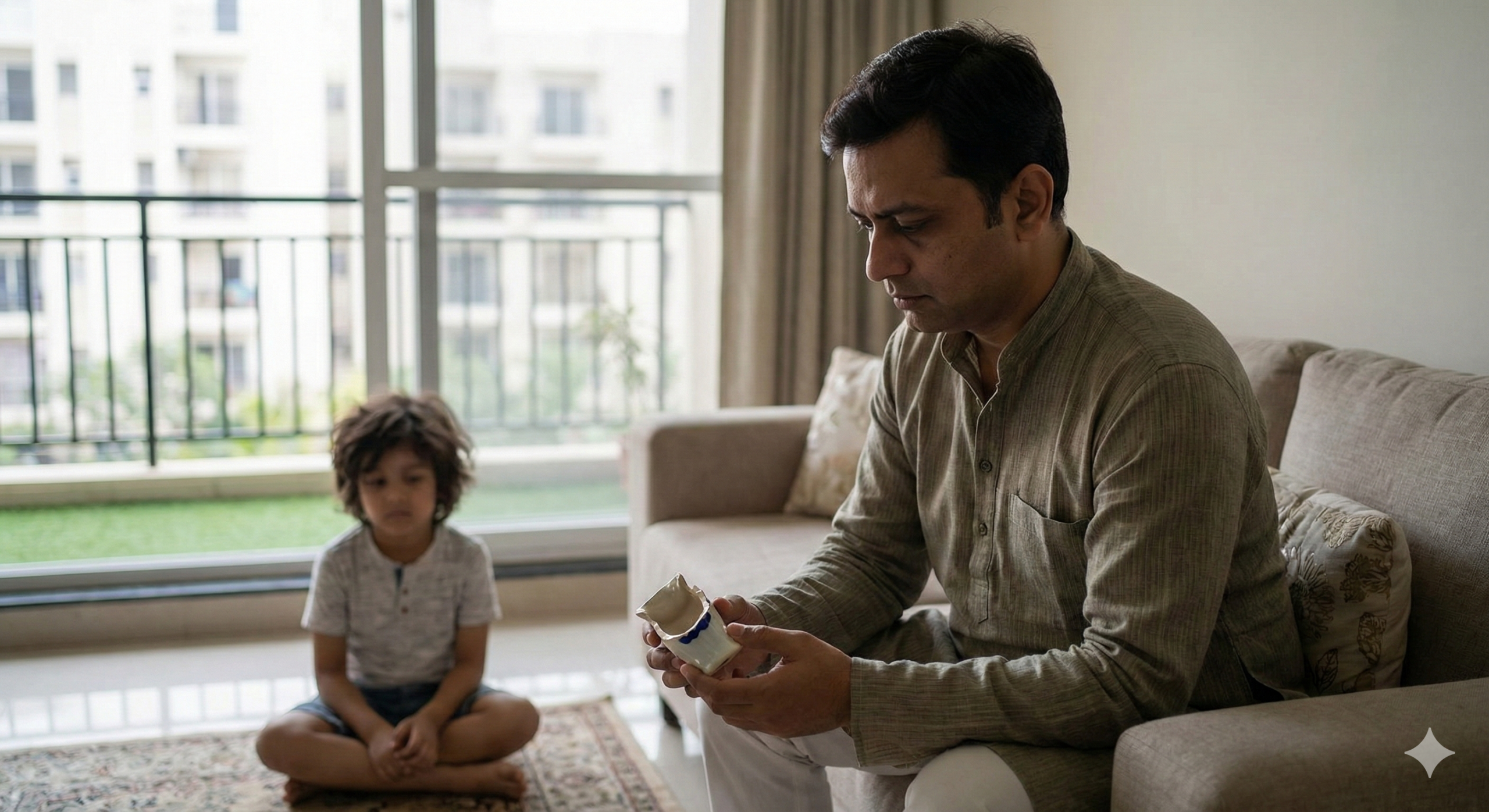
A man sits on a sofa, looking thoughtfully at a prescription bottle, while a young child sits on the floor in the background. The room is bright with large windows and a city view outside.

When my son was six, I made a quiet promise to myself.

I would not raise him the way I was raised.

I grew up in a strict, conditioned home. In my world, you didn’t speak freely. You didn’t explore. You didn’t take time to think. If you didn’t have an answer ready before the question came, the cost could be fear, shame, even beating.

So when I became a father, I decided something: My child will never be afraid of me.

I thought that promise would automatically create openness.

I was wrong.

My son used to go for tabla classes once a week. He was doing well—so well that his teacher called us and said, “He’s very good. He has a great future.”

As a parent, you know that feeling. Pride, relief, hope. The sense that something is “working.”

Then, suddenly, one week he said, “I don’t want to go.”

I assumed it was a mood. We skipped a class.

The next week he refused again. More firm this time. “I won’t go.”

So I asked the obvious question: “Why?”

He said, “I won’t tell you.”

I tried again, softer. “Okay, tell your mom then.”

He refused that too. “I won’t tell her also.”

That’s when the disappointment hit.

Not because he stopped tabla.

Because my six-year-old wouldn’t share something with me.

And in my head, that meant only one thing: I’m failing as a father.

I didn’t hit him. I didn’t yell. I didn’t threaten.

But internally, I was spiraling.

My mind started manufacturing stories: Did someone hurt him? Did the teacher say something? Did something happen that he’s hiding? Is he scared? Is he being bullied?

I even went to the teacher and asked. The teacher didn’t know anything.

Meanwhile my son was fine. He was normal in every other area. No visible signs of stress. No decline. No withdrawal.

Just this one locked door.

And I kept standing outside it, wanting a key.

That was the real pain: I couldn’t access my child’s inner world.

Years passed.

When he was around thirteen, casually, with no pressure, we asked again: “What happened in tabla class? Why didn’t you want to go?”

He answered like it was the simplest thing in the world.

The teacher had three dogs.

One day a dog came close… and licked him.

He was scared. Shocked. Frozen.

And that was it.

That tiny moment—so small from an adult’s view—was big enough in a six-year-old’s nervous system to make him quit completely.

When we heard it, we laughed. Not at him—at the simplicity of it, and at how dramatic my imagination had made it.

But the laughter came with an aftertaste.

Because I saw what I had really been carrying for years.

The real expectation I discovered in myself wasn’t about success.

It wasn’t “he must become a tabla player” or “he must be great.”

It was subtler.

It was more dangerous.

It was an expectation of emotional access.

Somewhere inside me was this belief:

“If I am a safe father, my child will tell me everything.”

That belief sounds noble.

But it creates pressure.

Because when the child doesn’t speak, the father doesn’t just feel curious. He feels rejected. He feels powerless. He feels like he’s losing the relationship.

And then he starts chasing.

Not because the child is wrong.

But because the father is afraid.

That day taught me something I didn’t learn in my own childhood:

A child’s silence is not always rebellion. Sometimes it’s just development.

Sometimes they don’t have words yet.

Sometimes they don’t trust their own feelings yet.

Sometimes they’re ashamed.

Sometimes they’re confused.

And sometimes… they just need time.

Not interrogation.

Not persuasion.

Time.

I still don’t put “outcome expectations” on my children the way my parents put them on me.

I don’t care what title they achieve.

I don’t want a child who performs for approval.

I want a child who becomes a good human being. Someone with pride and poise. Someone who doesn’t live to please others. Someone who is true to themselves.

And I want to be the kind of father whose presence is stable enough that my child can come to me…

Not on my timeline.

On theirs.

If you’re a father reading this, here’s the question worth asking:
The Day My Child Disappointed Me… and What I Discovered About My Expectations
When my son was six, I made a quiet promise to myself.

I would not raise him the way I was raised.

I grew up in a strict, conditioned home. In my world, you didn’t speak freely. You didn’t explore. You didn’t take time to think. If you didn’t have an answer ready before the question came, the cost could be fear, shame, even beating.

So when I became a father, I decided something: My child will never be afraid of me.

I thought that promise would automatically create openness.

I was wrong.

My son used to go for tabla classes once a week. He was doing well—so well that his teacher called us and said, “He’s very good. He has a great future.”

As a parent, you know that feeling. Pride, relief, hope. The sense that something is “working.”

Then, suddenly, one week he said, “I don’t want to go.”

I assumed it was a mood. We skipped a class.

The next week he refused again. More firm this time. “I won’t go.”

So I asked the obvious question: “Why?”

He said, “I won’t tell you.”

I tried again, softer. “Okay, tell your mom then.”

He refused that too. “I won’t tell her also.”

That’s when the disappointment hit.

Not because he stopped tabla.

Because my six-year-old wouldn’t share something with me.

And in my head, that meant only one thing: I’m failing as a father.

I didn’t hit him. I didn’t yell. I didn’t threaten.

But internally, I was spiraling.

My mind started manufacturing stories: Did someone hurt him? Did the teacher say something? Did something happen that he’s hiding? Is he scared? Is he being bullied?

I even went to the teacher and asked. The teacher didn’t know anything.

Meanwhile my son was fine. He was normal in every other area. No visible signs of stress. No decline. No withdrawal.

Just this one locked door.

And I kept standing outside it, wanting a key.

That was the real pain: I couldn’t access my child’s inner world.

Years passed.

When he was around thirteen, casually, with no pressure, we asked again: “What happened in tabla class? Why didn’t you want to go?”

He answered like it was the simplest thing in the world.

The teacher had three dogs.

One day a dog came close… and licked him.

He was scared. Shocked. Frozen.

And that was it.

That tiny moment—so small from an adult’s view—was big enough in a six-year-old’s nervous system to make him quit completely.

When we heard it, we laughed. Not at him—at the simplicity of it, and at how dramatic my imagination had made it.

But the laughter came with an aftertaste.

Because I saw what I had really been carrying for years.

The real expectation I discovered in myself wasn’t about success.

It wasn’t “he must become a tabla player” or “he must be great.”

It was subtler.

It was more dangerous.

It was an expectation of emotional access.

Somewhere inside me was this belief:

“If I am a safe father, my child will tell me everything.”

That belief sounds noble.

But it creates pressure.

Because when the child doesn’t speak, the father doesn’t just feel curious. He feels rejected. He feels powerless. He feels like he’s losing the relationship.

And then he starts chasing.

Not because the child is wrong.

But because the father is afraid.

That day taught me something I didn’t learn in my own childhood:

A child’s silence is not always rebellion. Sometimes it’s just development.

Sometimes they don’t have words yet.

Sometimes they don’t trust their own feelings yet.

Sometimes they’re ashamed.

Sometimes they’re confused.

And sometimes… they just need time.

Not interrogation.

Not persuasion.

Time.

I still don’t put “outcome expectations” on my children the way my parents put them on me.

I don’t care what title they achieve.

I don’t want a child who performs for approval.

I want a child who becomes a good human being. Someone with pride and poise. Someone who doesn’t live to please others. Someone who is true to themselves.

And I want to be the kind of father whose presence is stable enough that my child can come to me…

Not on my timeline.

On theirs.

If you’re a father reading this, here’s the question worth asking:

Are you disappointed in your child… or are you disappointed that you couldn’t access them?

Because those are two completely different pains.

And one of them is not the child’s job to solve.

Are you disappointed in your child… or are you disappointed that you couldn’t access them?

Because those are two completely different pains.

And one of them is not the child’s job to solve.

The Day I Realised My Anger Was Actually Fear

A man sits on a balcony with his hands clasped under his chin, looking thoughtful. He faces a cityscape at dusk, with a cup of tea or coffee on the table in front of him.

There’s a moment every man remembers — the moment he stops blaming the world for his rage and starts asking what’s underneath it.

Mine didn’t come in a single flash. It came slowly, through practice. Through sitting with my anger instead of spitting it out.

I had started noticing my anger. Not analysing it from the outside, but being present to it as it rose. And somewhere in that practice, something shifted. I began pausing. Not suppressing — pausing. I didn’t respond when I was angry. I just stayed with it.

And when I stayed with it long enough, I found what was actually there.

Fear.

Most of the time when I got angry, underneath it was a fear — the fear that the person in front of me was making me wrong.

I’m a conscientious man. Rule-abiding. I don’t break rules. So when someone made me wrong — even subtly — it didn’t land as an opinion. It landed as a personal attack. My values felt broken. My identity felt threatened.

This showed up everywhere. On the road, someone would overtake recklessly or cut me off. A small act of invalidation. A stranger not following the rules I believed the world should follow. And my body would respond before my mind could catch up — heat flooding through me, chest tightening, heart rate spiking, fight mode activated.

In those moments, the only language I had was morality. I am right. You are wrong. That was the entire conversation inside my head.


And that’s where the deeper realisation hit.

Morality — our belief about what is right and wrong — was the very lens that kept triggering the fear. Because morality demands a world of rules. And the world doesn’t work that way. Not everywhere. Not with everyone.

A crowd doesn’t follow rules unless there’s a system — reward and punishment — holding the structure in place. Outside that system, expecting moral compliance from every person in every situation is a setup for constant fear.

I was living in that setup.

Every time someone broke “the rules,” my brain registered it as: You are being invalidated. You are not respected. You are wrong.

That’s not anger. That’s fear wearing the mask of righteousness.


The shift didn’t come from controlling the fear. It came from recognising it.

There was a situation with a tenant who had stopped paying rent. I asked him to vacate. What followed was unexpected — he started threatening me. Then calls started coming from multiple people, all threatening. The situation escalated fast.

My body did what it always did. The fear fired. The anger rose.

And this time, I had my burst. Not at them — at myself. Internally, I erupted.

But then I sat down. Regulated. Breathed through it. And in that stillness, I saw the pattern clearly: This is a game. I’m being played. And if I react, I lose.

So I didn’t react.

I waited. I let the silence do its work. And the game changed — not because I won, but because I didn’t give my fear a stage to perform on.


Here’s what I’ve learned:

Not reacting doesn’t make you validated. It doesn’t hand you a victory. But it stops making you wrong. And for a man who has spent years being triggered by the fear of being made wrong, that’s everything.

The anger was never the problem. The fear underneath it was. And the morality lens I was looking through — the constant sorting of right and wrong — was the fuel that kept that fear alive.

When I stopped needing the world to follow my rules, the fear lost its grip. And when the fear lost its grip, the anger had nowhere to land.

That’s the day everything changed.

The Hardest Apology I Ever Made as a Father

Father apologizing to son for past mistakes, expressing regret and seeking reconciliation.

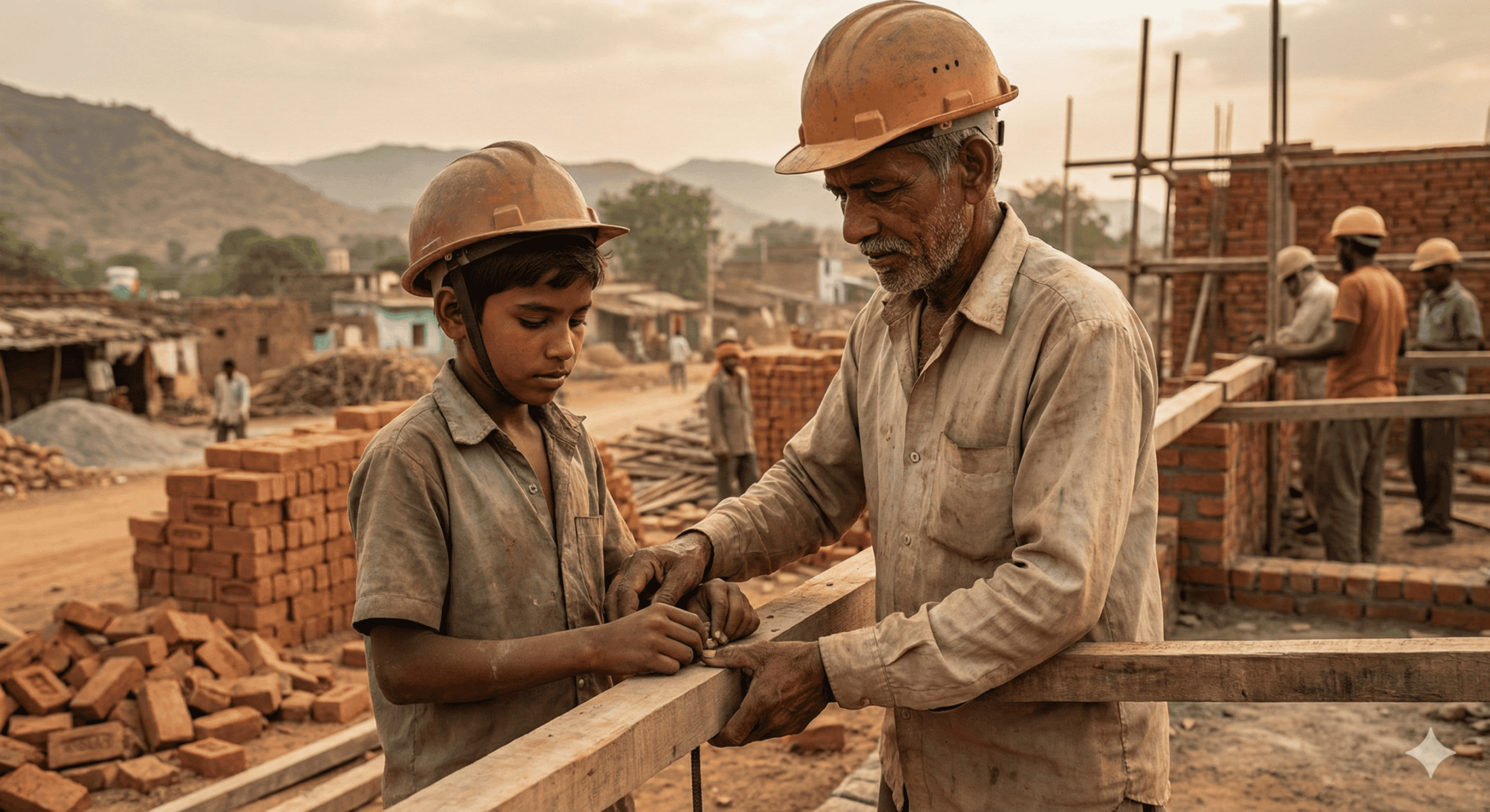
My son was seven when the bullying started. A nephew — three years older, bigger, louder — would push him around whenever the families gathered. My son would come to me, again and again, with the same complaint. Different words each time, but always the same look in his eyes: Do something. Make it stop.

The Thing You Do After

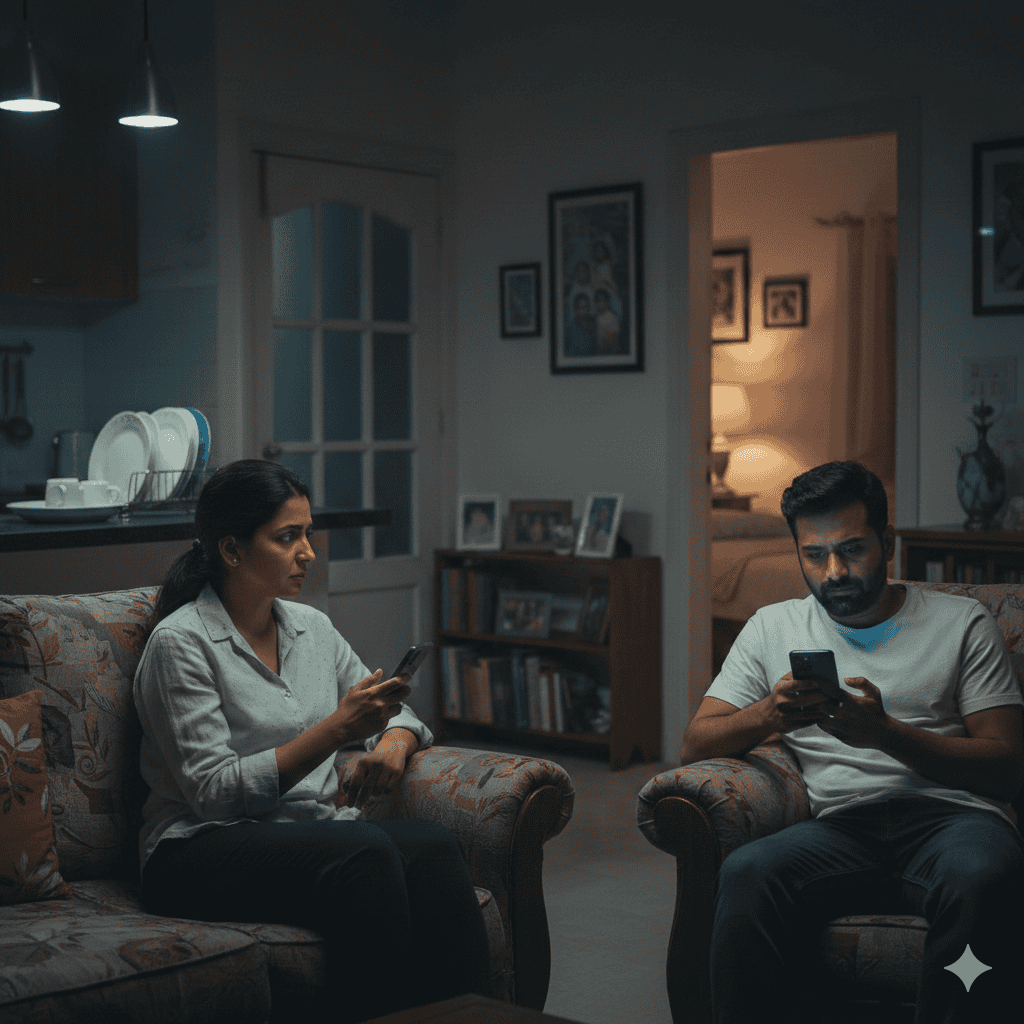
Man sitting on sofa with head in hands, experiencing stress after work.

There’s a moment every father knows but rarely talks about.It’s not the moment you lose your temper. That part is fast, almost mechanical—a switch trips, your voice gets louder than you intended, your face becomes something your child doesn’t recognize. That part happens before you even know it’s happening. The moment I’m talking about comes … Read more

The Silence After the Door Closes

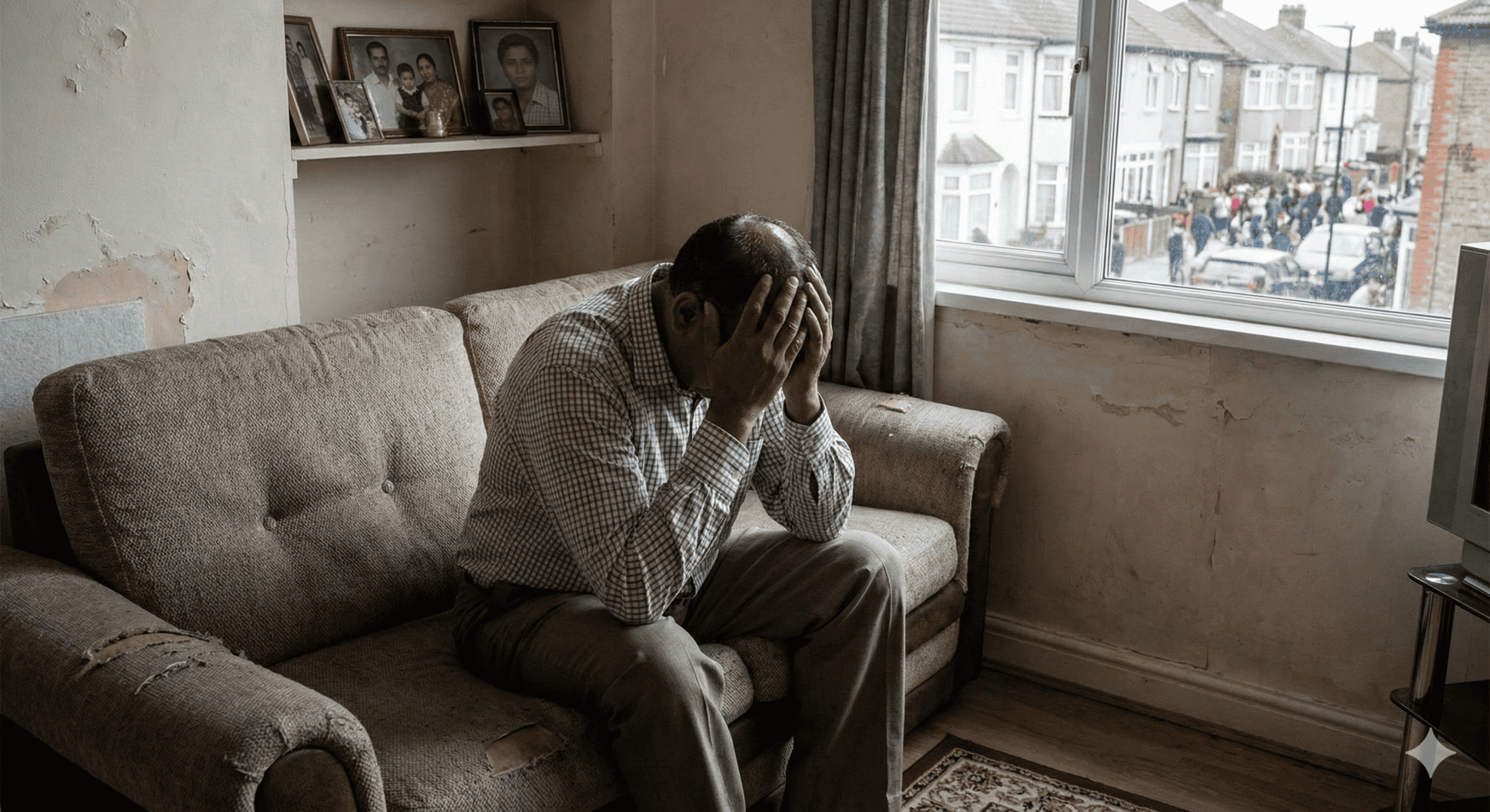
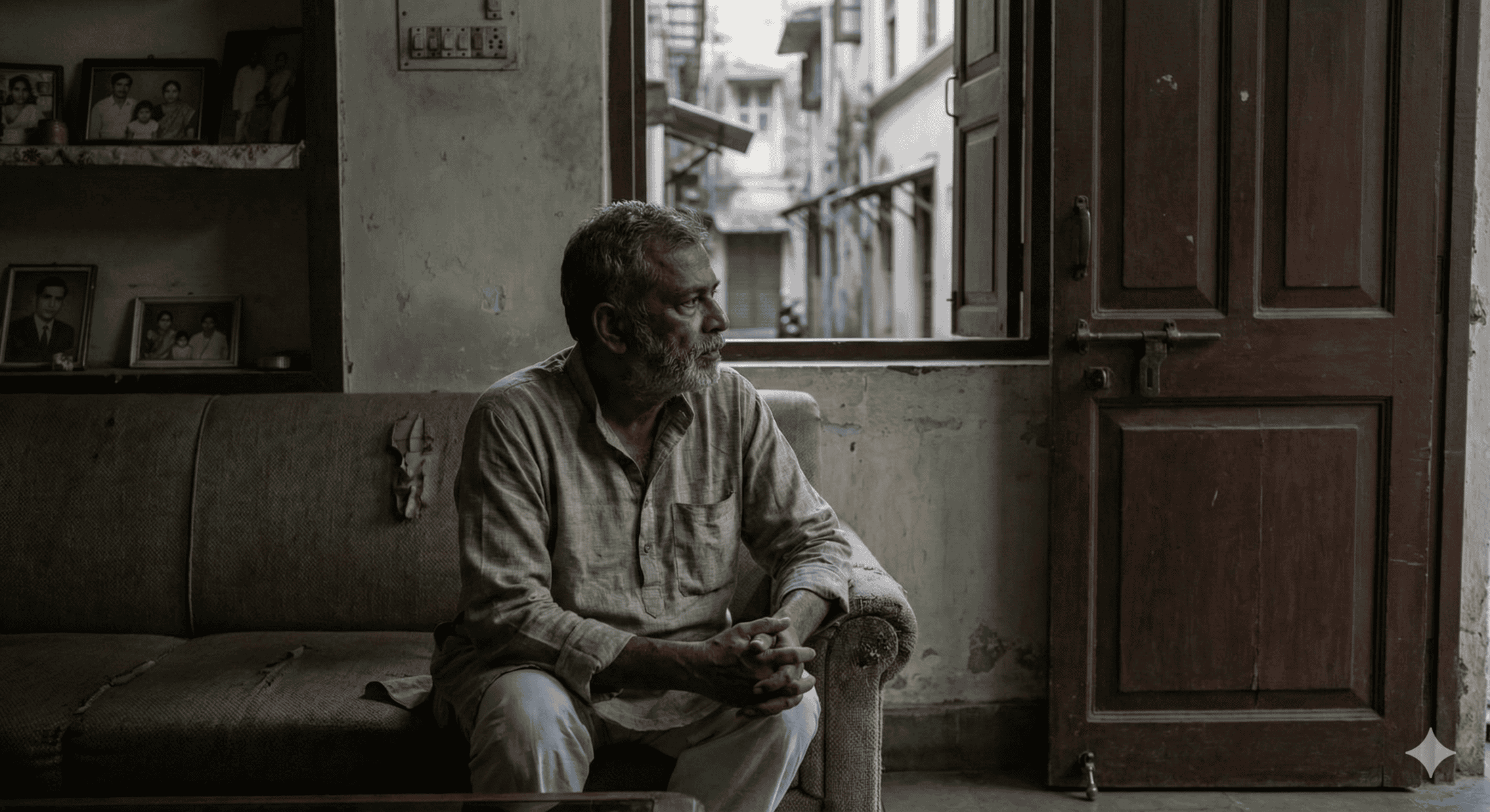
An elderly man with gray hair and a beard sits pensively on a worn sofa in a dimly lit room, wrapped in silence after the door closes, gazing out of an open window. The walls are old and peeling, family photos displayed on a shelf behind him.

There’s a particular kind of silence that visits a home after an argument doesn’t happen. Not because it was resolved. Because someone swallowed it. You know this silence. It sits in the living room after your wife walked away mid-sentence—not because she was done talking, but because she realized you weren’t really there. Your body … Read more

The Day I Decided, It’s Okay To Be Average

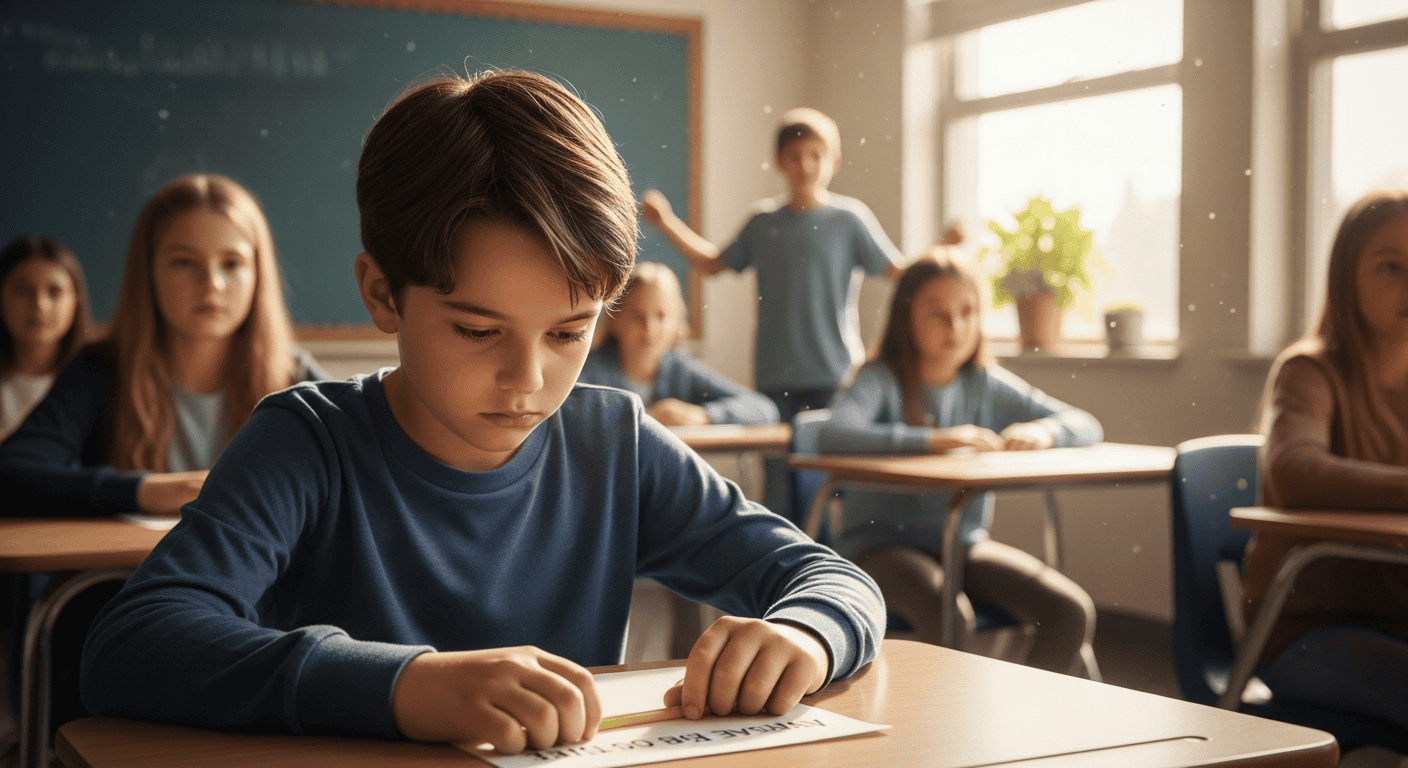
A young boy sits at his desk in a classroom, looking down thoughtfully at a piece of paper, reflecting on personal growth while other students sit nearby. Sunlight streams through the windows, and a chalkboard is visible in the background.

Nanni Teacher was reading out the ranks. I was sitting in my fourth standard classroom, hands on the desk, waiting for my name. I had calculated it already—third, maybe second. I had 97%. But when my name came, it came seventh. Or eighth. I don’t remember exactly. What I remember is the video that started … Read more

Why I Need Quiet Strength?

Some Men Speak To Be Heard. Quiet Ones Lead From Presence. You’ve done your best to stay calm. But inside, there’s pressure. A low burn. You don’t want to hurt anyone, but you don’t want to be walked over either. Communication, marriage, fatherhood—it all feels heavier lately. If you’ve felt like something’s off but can’t … Read more