Most fathers don’t break down. They break inside — quietly, efficiently, invisibly.
When Deepak’s father passed away, everyone said the same thing:
“He’s so strong.”
“He didn’t even cry.”
“He’s holding the family together.”
And they were right – on the outside.
Deepak arranged the funeral, comforted his mother, handled finances, and went back to work within four days.
But something inside him didn’t settle.
Two months later, he began waking up tired even after full nights of sleep.
He found himself snapping at his wife for minor things.
His kids’ noise, once background music, now felt unbearable.
He wasn’t angry at them. He was simply full.
He had absorbed so much pain without ever letting it move through him.
And like most men, he had no clue what “emotional healing” actually meant – or why it mattered.
The Quiet Crisis in Fatherhood
Most fathers aren’t falling apart because of failure.
They’re collapsing under the weight of unprocessed emotion.
They carry grief from losses they never named.
They carry anger from years of being misunderstood.
They carry guilt for not being “enough” – for their kids, their wives, their careers, themselves.
The tragedy is that no one ever taught them how to release emotion.
Only how to restrain it.
They were told, “Be strong.”
But strength, without softness, hardens.
And when you can’t process emotion, you start projecting it – onto the people you love the most.
That’s how arguments happen over small things.
That’s why emotional walls form in marriages.
That’s why fathers slowly turn into ghosts in their own homes — present, but unreachable.
The Science of Unfelt Feelings
Here’s what modern neuroscience now confirms:
Every emotion is energy. When it’s expressed, it completes a cycle.
When it’s suppressed, it stays stored – in the nervous system, in muscles, in the breath.
That’s why after a long day, when you finally exhale, you often feel lighter — because the body has permission to release.
Unprocessed emotions don’t disappear. They disguise themselves.
As irritability.
As exhaustion.
As withdrawal.
And over time, the body says what the mouth refuses to: “Something needs to heal.”
The Emotional Blueprint Fathers Never Got
Fathers like Deepak were raised in emotional deserts – homes where silence meant safety.
If something hurt, you didn’t name it. You moved on.
So, as adults, these men became providers – excellent at structure, discipline, and responsibility.
But emotionally, they operate with outdated software.
Here’s what that looks like:
They can plan five years of finances but not five minutes of vulnerability.
They can protect their families from danger but not from distance.
They can talk about goals easily but freeze when asked, “How do you feel?”
Emotional healing doesn’t come naturally because it was never modeled.
But it can be learned.
The Father’s 5 Healing Practices
Here’s a practical framework every father can start with – small, rhythmic steps that rebuild emotional strength without overwhelm.
1️⃣ The Breath Reset – Regulate before you respond
When you feel triggered, pause. Inhale for 4 seconds, exhale for 6.
Three rounds.
This single act shifts your body from fight-or-flight to calm-awareness.
It teaches your nervous system that safety is self-created, not situational.
2️⃣ The Reflection Pause – A nightly emotional hygiene
Before sleeping, ask yourself two questions:
“What emotion did I feel most today?”
“Did I express or suppress it?”
Write one line. Don’t fix it. Just see it.
This tiny ritual retrains your brain to recognize feelings as information, not interference.
3️⃣ The Repair Ritual – Healing through humility
If you lose your cool with your spouse or child, return later.
Say:
“I realized I reacted from stress, not from truth. I’m sorry.”
Repair doesn’t make you weak – it makes you trustworthy.
Your child doesn’t learn from your perfection. They learn from your recovery.
4️⃣ The Connection Walk – Movement as medicine
Once a week, walk without music or calls.
Observe your breath, notice your body, and mentally whisper:
“I’m here. I’m safe. I’m healing.”
When fathers reconnect with their own bodies, they stop outsourcing calm to the world outside.
5️⃣ The Release Practice – Letting emotion leave the body
At least once a month, give yourself space to release.
That might mean journaling after a tough day, crying alone in your car, or breathing deeply while naming what hurts.
Release is not weakness – it’s emotional housekeeping.
You don’t live in a house you never clean. Why live in a body full of unexpressed dust?
Healing as Leadership
When a father heals, everything changes downstream.
The home feels safer because his energy is steady.
His children open up because they sense permission.
His partner trusts him more because his reactions are grounded, not volatile.
This is the new masculine blueprint – not suppressing emotion, but stewarding it.
A healed man doesn’t need to control. He creates coherence.
He doesn’t dominate. He stabilizes.
He doesn’t preach calm. He is calm.
That’s emotional leadership in its purest form.
Reflection for Readers
Pause for a second and ask:
What emotion has been sitting inside you the longest?
Grief?
Guilt?
Resentment?
Loneliness?
Now ask – who would benefit the most if you finally released it?
Your children?
Your wife?
Yourself?
Healing is not about the past.
It’s about giving your present family a better version of you.
Closing Truth
Most men wait until pain becomes crisis.
But real strength is healing before you’re forced to.
Because your family doesn’t need a perfect father.
They need a peaceful one.
And peace isn’t given to you – it’s built, breath by breath, choice by choice.
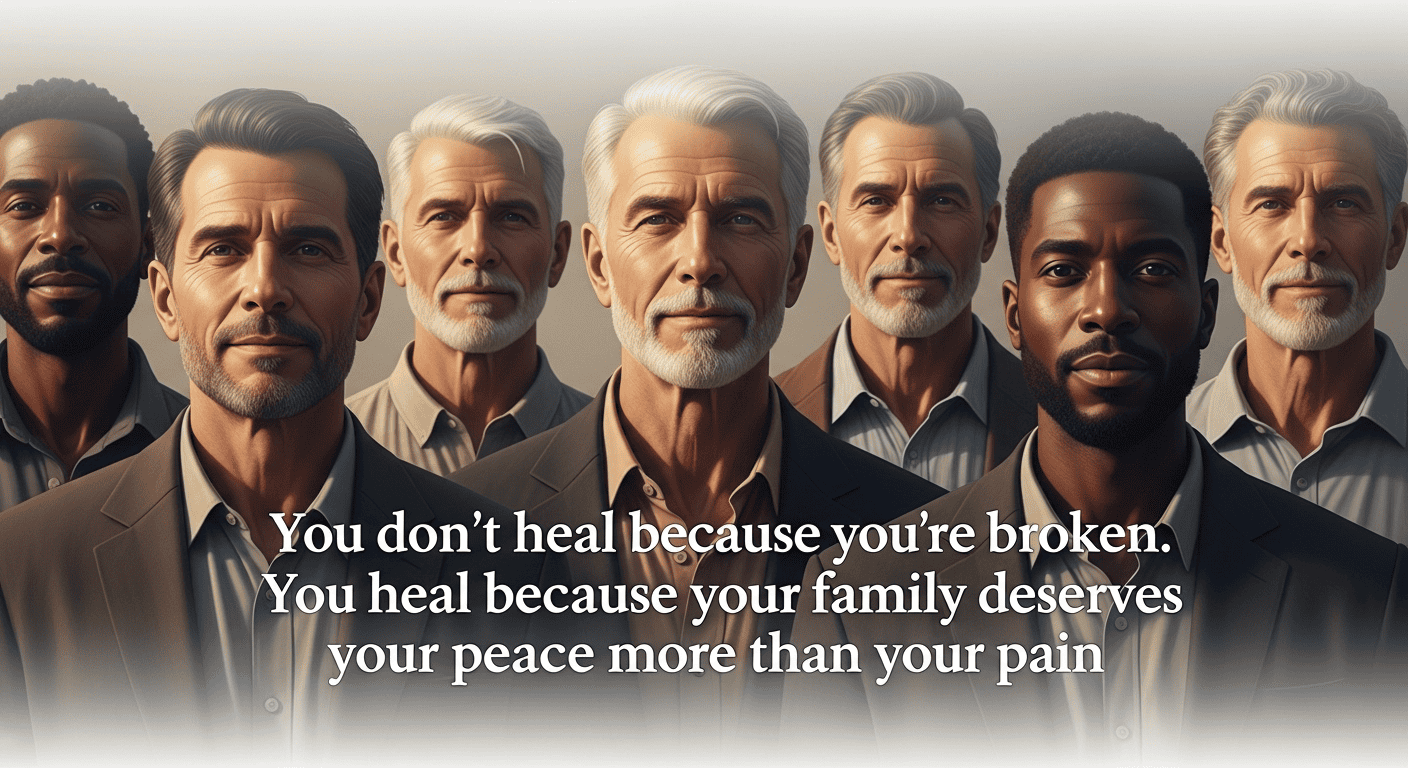
You don’t heal because you’re broken.
You heal because your family deserves your presence more than your protection.