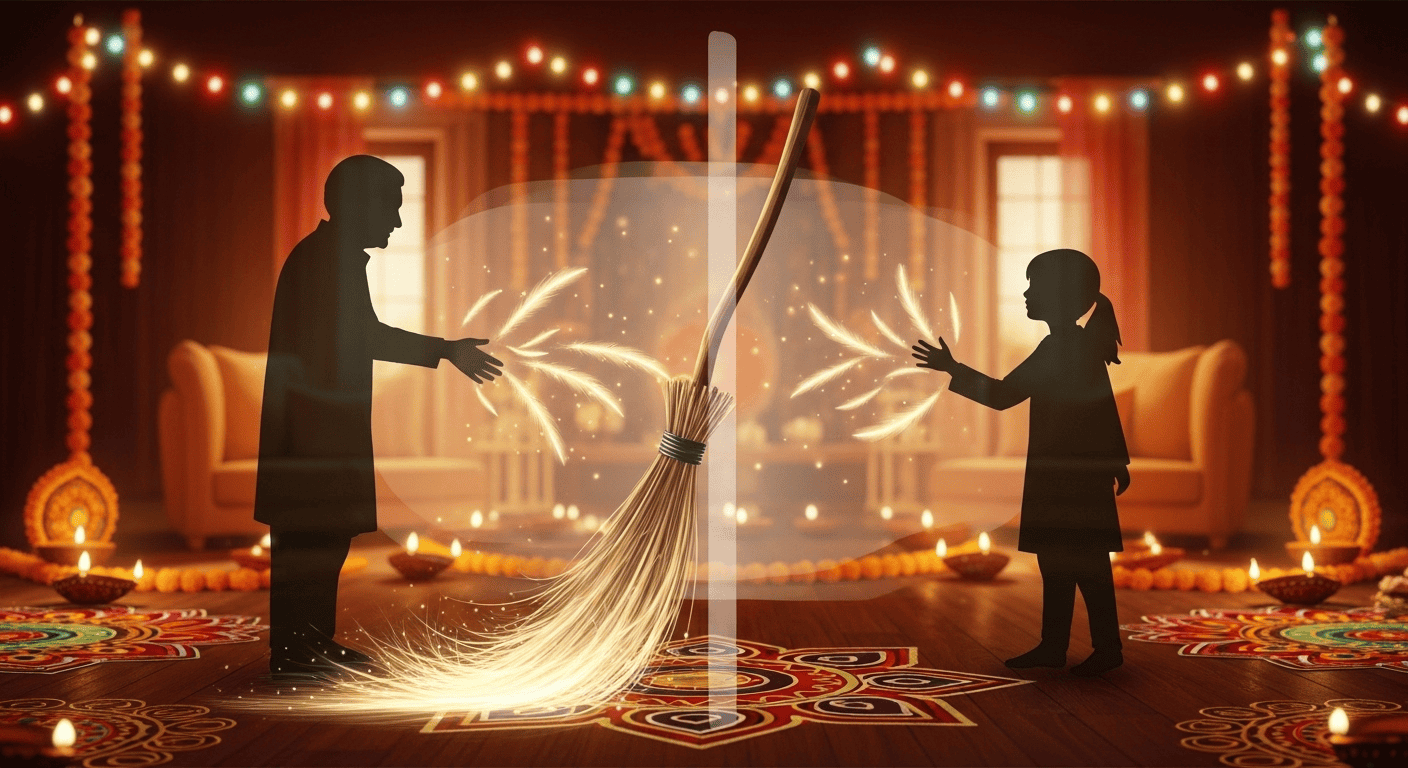
The House That Shone but Didn’t Feel Alive
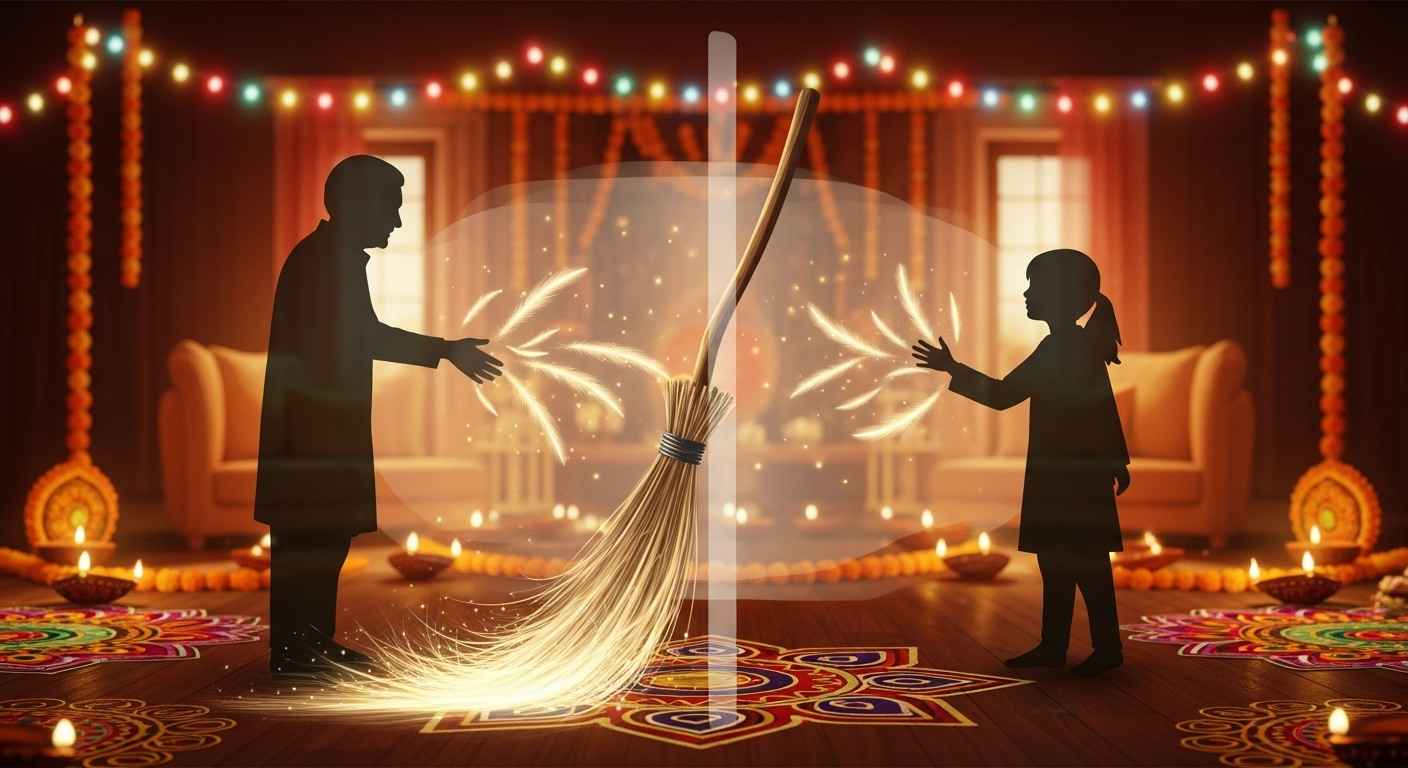
Raghav wiped the last trace of dust off the window frame. The scent of jasmine and cleaning polish mingled in the air, carrying that familiar feeling — Diwali was here.
The house looked radiant. Every lamp was polished, every corner decluttered, every diya ready to glow.
It should have felt satisfying.
But it didn’t.
His wife, Meera, walked past him quietly, holding a tray of diyas. He watched her from the corner of his eye. No words. No fight. Just a strange, silent formality that had replaced the warmth they once shared.
The children were upstairs, lost in their own worlds — music, screens, and half-hearted excitement.
The house was ready for the festival.
But something in the air felt heavy — like a silence that refused to leave.
Raghav realized he had cleaned everything outside him.
But he hadn’t cleaned what was between them.
The Forgotten Corners of Relationships
Every home gathers dust. So do relationships.
Not through betrayal or drama — but through neglect.
Little moments that go unspoken.
Disappointments that never get named.
Tiny hurts that are brushed aside in the rush of daily life.
Raghav could remember the first few Diwalis after their marriage — laughter, teasing, shared rituals, even a dance or two in the kitchen.
Now, they moved around each other like polite strangers.
It hadn’t happened overnight. It never does.
Distance rarely announces itself. It builds quietly — one skipped conversation, one distracted evening, one moment of “I’ll talk later.”
By the time you notice it, the emotional dust has settled so thick that you can’t see the warmth underneath.
Why Fathers Struggle to See Emotional Dust
Fathers like Raghav often miss the early signs of disconnection because they’re trained to focus on maintenance, not emotion.
He could fix a leaky tap in ten minutes but didn’t know how to fix the silence between him and Meera.
He had learned early in life that problems are solved by logic — not by listening, not by softness.
His father had been the same. A man who provided everything but never said “I miss you” or “I’m proud of you.”
So Raghav did what generations of men were taught:
He replaced emotional repair with practical service.
He worked harder, brought home gifts, planned vacations — all while avoiding the very conversations that could have saved the bond.
He was doing everything for his family, but nothing with them.
That’s the invisible blindspot of many fathers — mistaking provision for presence.
The Parallel Between Home Cleaning and Emotional Cleaning
When we clean for Diwali, we do it with intention.
We open cupboards, pull out forgotten boxes, and face the dust we ignored all year.
That’s what emotional cleaning looks like too.
It means facing the corners of our heart we’ve closed off — the people we’ve distanced from, the apologies we’ve avoided, the truths we’ve left unsaid.
Because the dirt that clogs a relationship isn’t visible. It’s emotional.
The resentment that never found expression.
The gratitude that never got spoken.
The tenderness that was replaced with tension.
And yet, just like your home — the emotional space can be cleaned, reorganized, and lit again.
The 4 Steps of Emotional Cleaning for Fathers
Here’s a simple framework to bring warmth back into your emotional home.
Think of it as your inner Diwali cleaning ritual.
1️⃣ Declutter What You’ve Stored
Take 10 minutes alone and ask yourself:
“What have I been avoiding saying?”
“Who am I holding resentment against?”
Write without censoring.
Sometimes the simple act of seeing your emotional mess on paper is enough to start loosening its grip.
2️⃣ Wipe Away the Dust of Ego
This is the hardest step. Ego always whispers: “Why should I go first?”
But leadership at home isn’t about hierarchy — it’s about initiative.
If you’re the emotionally aware one, start the repair.
Say:
“I know we’ve been distant. I miss how we used to talk. Can we reset?”
It’s not weakness — it’s wisdom.
It shows your family that love is not about pride; it’s about presence.
3️⃣ Light the Corners with Attention
During Diwali, you light lamps in every corner of your home.
Do the same with your relationships.
Light a diya of attention with your wife — ten minutes of real conversation.
Light a diya of curiosity with your children — ask, “What’s been exciting you lately?”
Light a diya of forgiveness with yourself — you’re learning, not failing.
Each small act of attention pushes darkness out a little more.
4️⃣ Create a Family Reconnection Ritual
Once a week, choose one ritual that brings everyone together — no screens, no tasks.
It could be cooking a simple meal together, a night walk after dinner, or even a gratitude circle before sleeping.
When families connect in small, regular ways, emotional repair becomes natural — not dramatic.
Because the opposite of distance isn’t intensity. It’s consistency.
The Cultural Mirror: What Diwali Really Teaches Us
Diwali isn’t just about wealth.
It’s about returning home to light.
In every Indian story, light doesn’t conquer darkness through noise — it simply exists.
Quietly. Persistently.
The diyas don’t fight the night; they reveal it.
They remind us that every dark home — physical or emotional — can glow again if you’re willing to tend to it daily.
And maybe, that’s what fathers were always meant to do — to be the quiet light of steadiness, forgiveness, and calm in their homes.
A father’s emotional healing is not a personal act.
It’s a generational offering.
Raghav’s Small Act of Repair
That evening, after the prayers were done, Raghav looked at the lights flickering along the balcony. Meera stood beside him, her face half-lit by the golden glow.
He turned to her and said softly,
“The house looks beautiful. But I realized something… we haven’t really looked at each other in a long time.”
Meera was silent for a moment, then smiled faintly.
“Maybe we’ve both been waiting for the other to start.”
He nodded.
No long speech. No dramatic moment.
Just an opening — small, genuine, alive.
And as they stood together, watching the diyas shimmer, Raghav felt something inside him unclench.
The house felt alive again — not because of the light, but because of the warmth returning between them.
The Takeaway – Clean Homes Shine for a Night. Clean Hearts Shine for a Lifetime.
Every Diwali, we make space for blessings by removing clutter.
Maybe this year, we extend that same wisdom to our relationships.
Call the friend you drifted from.
Apologize without overexplaining.
Sit with your spouse for ten quiet minutes.
Laugh with your children without correcting them.
Clean the distance.
Not just for them — for yourself.
Because true prosperity isn’t a home filled with light.
It’s a family filled with warmth.
And when fathers lead that emotional cleaning, the light they ignite doesn’t just illuminate their homes —
it shapes the emotional legacy their children will one day pass on.
🪔 Quiet Strength Reflection
Tonight, after the diyas fade, sit in that soft afterglow and ask yourself:
“What corner of my relationships needs light the most?”
And start there.
Because the festival of lights was never about decoration.
It was about restoration.