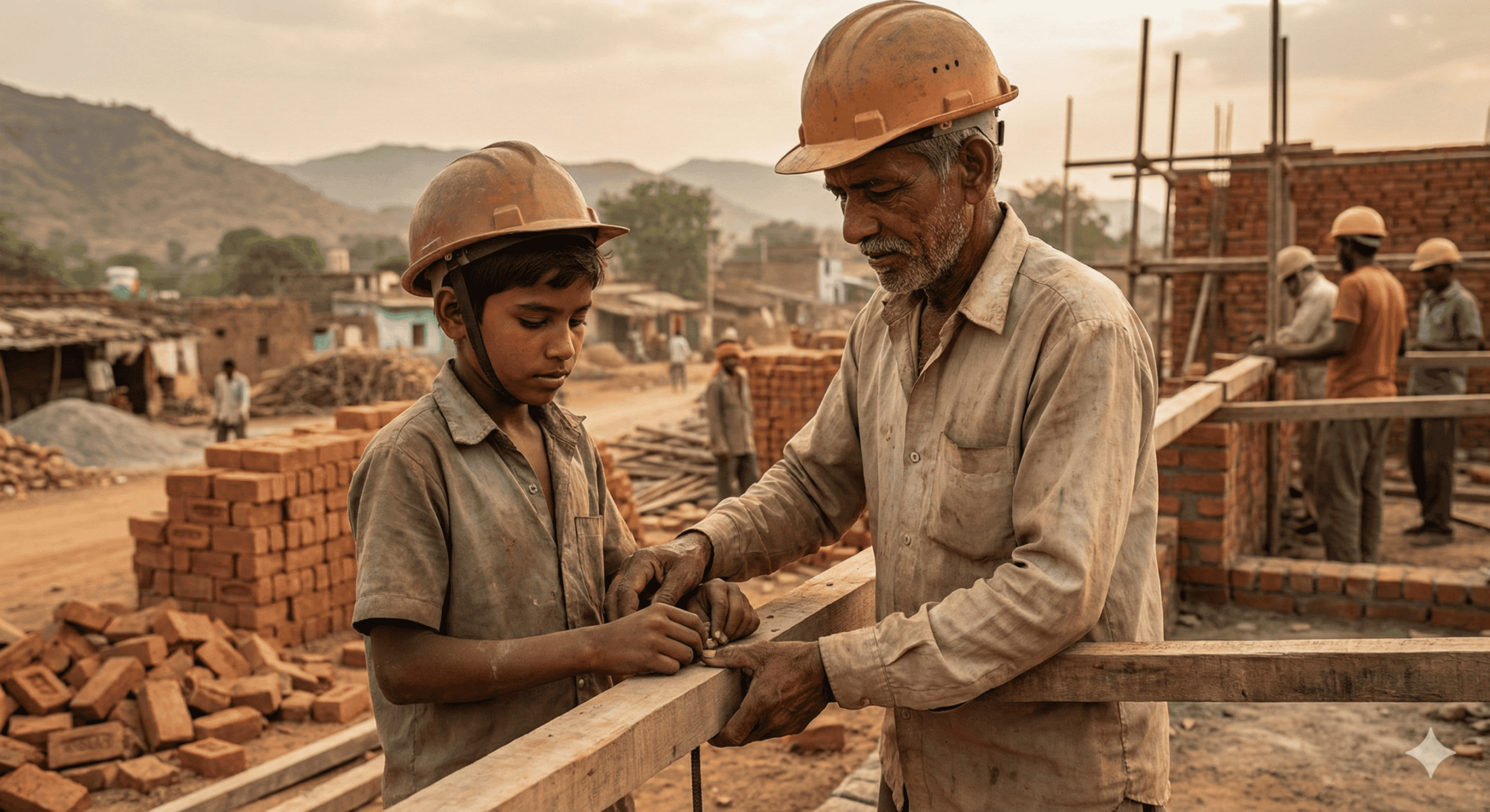
And it took me twenty years to teach my son something different.
My father never raised his voice.
He didn’t need to. His silence carried more weight than any shouting ever could. A glance across the dinner table. A pause before responding. The way he’d set down his pen when I entered the room — not angry, just… measuring.
I didn’t know it then, but I was being trained.
At twenty-six, I worked alongside him. Not as a son anymore — as a man trying to prove he belonged in a man’s world. Every morning, I watched him move through his day like a machine calibrated for output. Problems were solved. Complaints were irrelevant. Feelings were nowhere to be found.
I absorbed it all. Not through lectures. Through proximity.
This is how a man holds himself. This is what earns respect. This is the price of safety.
I didn’t question it. I didn’t even see it. A fish doesn’t question water.
The curriculum was simple.
Worth is performance — if you deliver, you matter; if you fail, you disappear. Safety is achievement — rest is earned, peace is earned, even love felt earned, though no one said it aloud. Silence is strength — a man who needs is a man who leaks; contain it, solve it, move on.
I thought I was learning discipline. I was learning fear.
Here’s what no one tells you about achievement-based safety: it works. For a while. You hit targets. You build things. People nod at you with something like respect. You start believing you’ve cracked the code — that the tightness in your chest is just the price of success.
But underneath, there’s a quieter truth. You are not building a life. You are fleeing a feeling. The feeling that if you stop — even once — you’ll be seen. And what’s seen won’t be enough.
I didn’t know where it started. Not then.
But later — much later — I traced the thread back. Age nine. A report card. Average marks. My mother’s disappointment heavy in the air. My father’s silence heavier.
And somewhere in that small body, a decision was made.
If this is what trying gets me, I’ll stop trying. I’ll stay low. Stay safe. Stay unseen.
It looked like laziness. It looked like settling. It was neither. It was a child trying to survive the weight of disappointment he didn’t have the tools to carry.
I carried that decision into adulthood without knowing it. Every achievement was compensation. Every success was penance. Every silence was armor. And beneath it all, a boy still flinching — waiting for the next report card, the next glance, the next measure of whether he was finally enough.
Then came my son.
Not all at once. Slowly. I’d watch him play — unbothered, unoptimized, completely uninterested in earning anything. Just existing. Laughing at nothing. Crying when he needed to. Reaching for me without calculating whether I’d approve.
And something began to crack. Not break. Crack. Light getting in.
One evening, I saw it clearly. I was correcting him for something small — his tone, maybe, or a task half-done. And I heard it. Not my voice. My father’s pause. My father’s glance. My father’s silent curriculum.
You’re teaching him that safety is earned.
The realization didn’t arrive like thunder. It arrived like grief. I wasn’t protecting him. I was preparing him — for the same cage I built for myself at nine.
That night, I made a decision. Not a resolution. Not a goal. Something quieter. I didn’t want my son to perform for safety. I wanted him to feel safe because of who I am, not what he does.
But seeing the pattern is not the same as escaping it.
The day after the realization, I woke up the same man. Same tightness in my chest. Same reflex to measure the day by output. Same voice in my head whispering: What did you accomplish? What did you earn?
Awareness is not freedom. It’s just the first crack in the wall. You still have to walk through.
I call it the uncomfortable middle — the space between seeing and becoming. The friction zone where you catch yourself mid-pattern, mid-sentence, mid-glance, and realize you’re still running the old software.
I’d correct my son, then hear my father’s voice. I’d withdraw from my wife, then recognize the armor. I’d fill my evenings with tasks, then notice I was fleeing stillness.
Again. And again. And again.
This is the part no one tells you about transformation: it’s not a moment. It’s a thousand failed moments where you choose to stay conscious anyway.
Then came the collapse.
Not dramatic. Not public. Just quiet unraveling. When you stop performing, you lose the markers that told you who you were. The achiever. The solver. The man who delivers. The one who earns his place.
Strip those away, and what’s left?
I didn’t know. And the not-knowing terrified me more than any failure ever had. There were days I wanted to go back — to pick up the armor again, to return to the exhausting safety of achievement-based worth. At least that pain was familiar.
But I didn’t go back. Not because I was strong. Because I’d seen my son’s face.
The way he looked at me when I was calm — not performing calm, but actually settled. The way his shoulders dropped. The way he moved closer instead of bracing.
He didn’t need my achievements. He needed my regulation. And I couldn’t give him what I didn’t have.
So I started building differently. Not goals. Rhythms.
Sleep — protected, non-negotiable. Not a reward for finishing, but a foundation for beginning. Morning stillness — even ten minutes. Not meditation for achievement, just presence before the world rushed in. Evening closure — a hard stop. The work doesn’t love you back. The family does.
These weren’t impressive. No one would write articles about them. But they held me in ways ambition never did.
I learned something that changed everything: regulation isn’t a feeling you find. It’s a rhythm you protect.
The shift happened slowly. I stopped correcting and started modeling.
Not because correction is wrong — but because I realized my children were never listening to my words. They were watching my body. My tone. My recovery.
Does he stay calm when things break? Does he repair when he ruptures? Does he rest without guilt, or does he perform exhaustion like a badge?
They absorbed what I lived. Not what I lectured.
So I changed what I lived.
One evening, my son spilled something. A full glass, across the table, onto papers I needed. The old me would have paused. Measured. Let the silence do the work — the way my father did.
But I didn’t.
I exhaled. Grabbed a cloth. Said, “No problem. Let’s clean it up.”
His eyes searched my face — looking for the glance, the pause, the signal that he’d failed. He didn’t find it. And something in him relaxed that I don’t think had ever relaxed around me before.
That moment taught me more than any book. More than any insight. They don’t need your perfection. They need your regulation.
There was a feeling I used to carry. I called it “the disappearing.”
In my own home, in my own life, I felt myself fading. Like I was present but not there. Performing father. Performing husband. Performing man. Somewhere along the way, I’d hollowed out to make room for the role.
But something changed when I stopped performing. I didn’t get louder. I got more present.
The internal friction began to ease — not because I was fixed, but because I was no longer at war with myself. No longer spending half my energy maintaining armor I didn’t need.
There was space now. Spaciousness. Room to feel. Room to fail. Room to stay.
I don’t have a manifesto. I have something smaller. A policy. Unglamorous. Operational.
I call it the Family Identity Mission — not because it sounds important, but because it helps me remember on the days I forget.
It goes like this:
I lead by what I live, not what I lecture. My children don’t need my perfection — they need my regulation. My wife doesn’t need my solutions — she needs my presence. I am not building achievers. I am modeling steadiness.
That’s it. No grand transformation. Just a quiet return — again and again — to what matters.
My father gave me what he had.
I see that now. Not cruelty. Not failure. Just a man building with the only tools he was given. Silence because he never learned to speak. Achievement because he never learned to rest. Distance because closeness wasn’t safe where he came from.
I don’t blame him. But I’m not copying him either.
This is the inheritance I choose: My son will not perform for safety. He will not earn his place in his own home. He will not learn that love is a transaction closed by achievement.
He will learn something different — not from my words, but from my nervous system.
Safety is not earned. Safety is held.
Held in my steadiness. Held in my repair. Held in the rhythm I protect — not for me, but for them.
I’m not finished.
I still catch the old software running. I still hear my father’s pause in my own silence. I still feel the pull of performance when the world gets loud.
But I’m not the same man who walked into that office at twenty-six, trying to earn his place beside his father.
I’m the man who walked out of the cage — slowly, imperfectly, and still walking.
Not because I found the answer. But because I finally asked a different question:
What do I want my children to inherit?