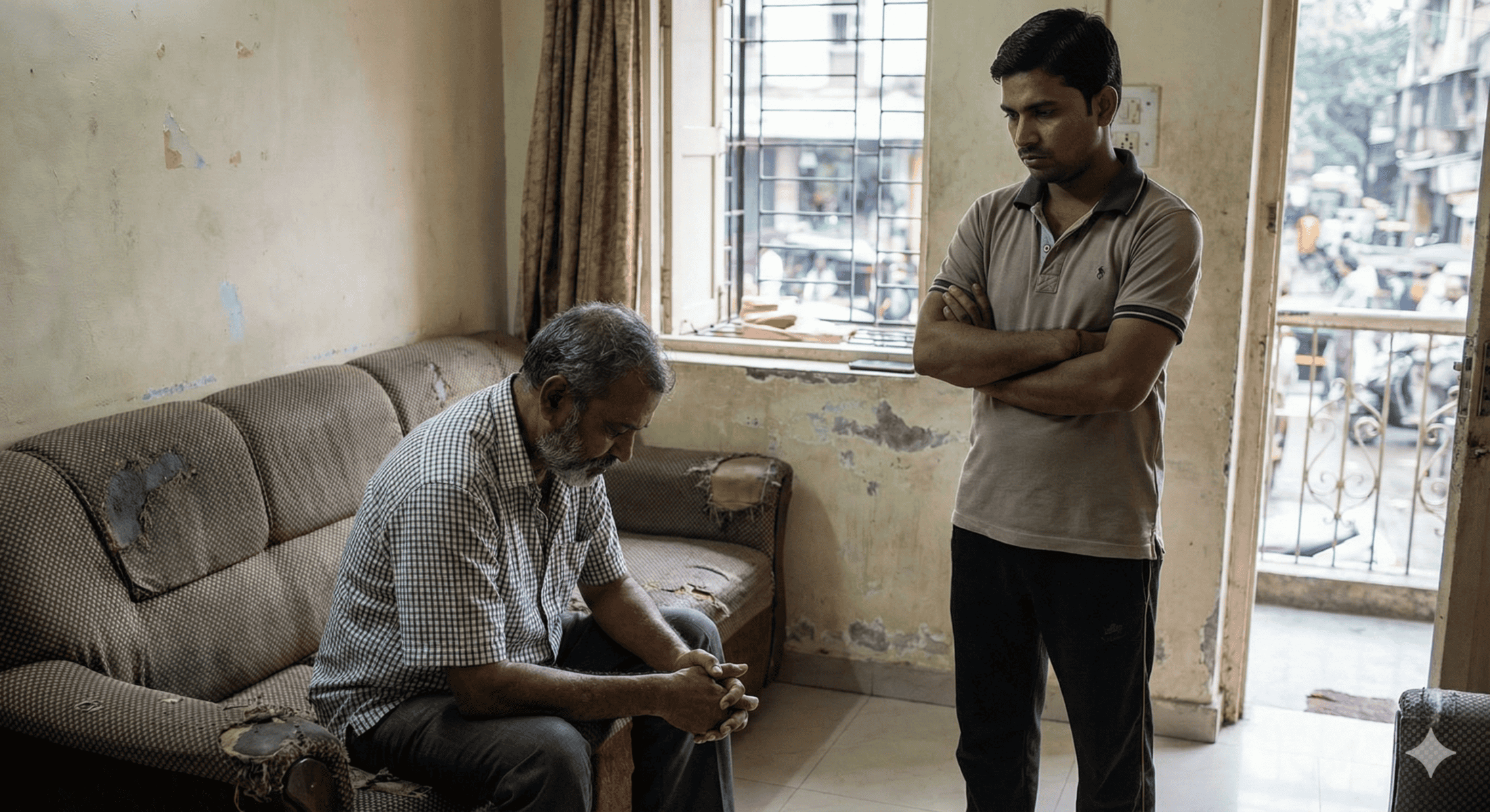
I tried to protect my son from pain. I gave him the exact same wound I carried.
My son was seven when the bullying started.
A nephew — three years older, bigger, louder — would push him around whenever the families gathered. My son would come to me, again and again, with the same complaint. Different words each time, but always the same look in his eyes: Do something. Make it stop.
And I did what I believed a good father does. I kept him safe.
I pulled him away from that company. I drew the boundary. I removed the threat. Problem solved — or so I thought.
But protection has a way of becoming something else when you’re not paying attention.
As my son grew older, the bullying stopped. The cousin was no longer the issue. But my instinct to shield him didn’t stop with it. It just found new targets.
In our society, there was a group of children — neighborhood kids — who would meet every evening, hang out until nine o’clock, do what kids that age do. Learn from each other. Test social boundaries. Build the kind of friendships that only form when you’re young enough to be unguarded and old enough to remember it.
I didn’t let my son join them.
Not out of cruelty. Out of the same instinct that had worked before: keeping him away from others meant keeping him safe. I had already seen what happened when he was around the wrong company. Why risk it again?
So I kept the wall up. And I thought it was over.
It wasn’t over.
When my son was nineteen, he told me something that stopped me cold.
That group — the neighborhood kids who used to meet every evening — they had grown up together. They were now a tight-knit circle. Best friends. A closed group. They didn’t add new members. They didn’t need to. They had built something over years of showing up for each other, night after night, in that ordinary window between homework and bedtime.
And my son had watched it from the outside the entire time.
“I always longed to be part of that group,” he said. Not with anger. With something worse. With the quiet weight of a loss he had already accepted.
When he said it, I felt two things collide inside me.
The first was grief — for him. For the belonging he wanted and didn’t get. For the years of watching from the window while friendship happened without him.
The second was recognition — for myself. Because the moment he said those words, I saw my own childhood staring back at me.
I never had friends growing up. I never had a peer circle. I never had a group where I belonged, where I could show up unannounced and be welcome. My parents raised me that way — contained, protected, separate. And I had always told myself it was fine. That it didn’t matter. That I turned out okay.
But standing in front of my nineteen-year-old son, hearing him name the exact same loss I had never allowed myself to name, I understood something I had been avoiding for decades:
I hadn’t protected him from my pain. I had passed it to him. Different packaging. Same wound.
So I apologized.
Not a casual “sorry about that.” Not a deflection dressed as an apology. A real one. The kind that costs something.
I told him the truth.
I told him about my own childhood — how I grew up without friends, without a circle, without belonging. How my parents kept me contained because that was the only safety they knew. And how I carried that blueprint into his life without ever questioning it.
I told him my intention was only ever to protect him. That when I saw him being bullied at seven, something locked inside me — a father’s reflex to stand between his child and pain. And that reflex never unlocked. It just kept running, long past the point where it was needed.
And I told him I was wrong.
Not wrong to protect him at seven. Wrong to let that protection calcify into restriction. Wrong to assume that what was tolerable for me would be tolerable for him. Wrong to mistake isolation for safety.
Then I did the only thing I could do with the time we still had.
I gave him permission.
“From now on, you can stay out late. You can be with whoever you choose. The only thing I ask is that you let me know you’re safe.”
It wouldn’t undo the loss. I knew that. The group was closed. Those years were gone. No apology in the world can return a childhood to a nineteen-year-old.
But it could open the next door.
And I added something else — not as a condition, but as a trust. I told him that as a grown man moving through the world at late hours, he carries a responsibility. If there are women in the group, he is the one who stays alert. Not because something will go wrong, but because something might. And in that moment, he is the guardian.
He heard it differently than he would have heard it at seven. He heard it as his father trusting him — not controlling him. Speaking to the man, not correcting the child.
He maintains that to this day.
Here is what that apology changed.
It didn’t fix the past. It didn’t give him back the friendships he missed. It didn’t erase the years of watching from the outside.
But it did something else. Something I didn’t expect.
It made him trust me — not less, but more. Because I hadn’t defended myself. I hadn’t explained away his loss. I had stood in front of him and said: I see what I did. I see what it cost you. And I see where it came from inside me.
That kind of honesty between a father and a son doesn’t just repair. It rebuilds. It tells the child: This man is safe to be honest with. This man can hold the truth about himself without breaking.
And that — not the permission, not the new rules — is what actually changed things between us.
I think about this often now.
How many fathers are protecting their children from the wrong thing? How many of us are building walls against threats that no longer exist — while the real loss is happening quietly, on the other side of the wall we built?
How many of us are repeating our parents’ pattern — not out of malice, but out of blindness? Because we never stopped to ask: Was what I survived actually okay? Or did I just learn to call it that?
The hardest apology I ever made wasn’t hard because I was wrong.
It was hard because I was wrong for the right reasons. I loved my son. I wanted him safe. And I still caused the wound.
That’s the kind of truth that doesn’t let you off the hook. It just teaches you to hold the hook differently — with humility instead of shame. With openness instead of defense.
My son didn’t need a perfect father. He needed a father who could say: I see it now. I’m sorry. And here’s what I’m going to do differently.
That’s repair. And repair, it turns out, is louder than any apology.
— Santosh Acharya