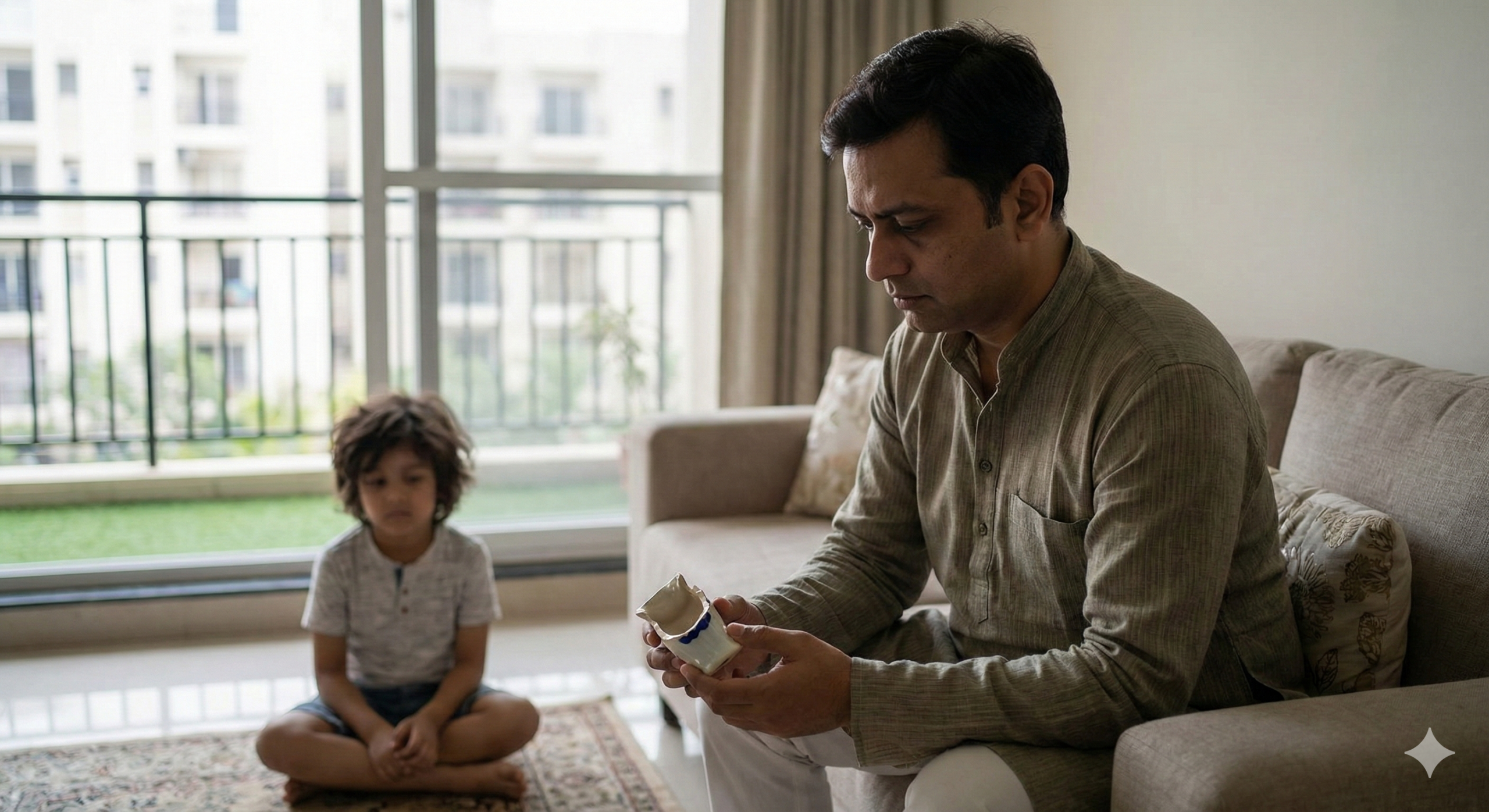
When my son was six, I made a quiet promise to myself.
I would not raise him the way I was raised.
I grew up in a strict, conditioned home. In my world, you didn’t speak freely. You didn’t explore. You didn’t take time to think. If you didn’t have an answer ready before the question came, the cost could be fear, shame, even beating.
So when I became a father, I decided something: My child will never be afraid of me.
I thought that promise would automatically create openness.
I was wrong.
My son used to go for tabla classes once a week. He was doing well—so well that his teacher called us and said, “He’s very good. He has a great future.”
As a parent, you know that feeling. Pride, relief, hope. The sense that something is “working.”
Then, suddenly, one week he said, “I don’t want to go.”
I assumed it was a mood. We skipped a class.
The next week he refused again. More firm this time. “I won’t go.”
So I asked the obvious question: “Why?”
He said, “I won’t tell you.”
I tried again, softer. “Okay, tell your mom then.”
He refused that too. “I won’t tell her also.”
That’s when the disappointment hit.
Not because he stopped tabla.
Because my six-year-old wouldn’t share something with me.
And in my head, that meant only one thing: I’m failing as a father.
I didn’t hit him. I didn’t yell. I didn’t threaten.
But internally, I was spiraling.
My mind started manufacturing stories: Did someone hurt him? Did the teacher say something? Did something happen that he’s hiding? Is he scared? Is he being bullied?
I even went to the teacher and asked. The teacher didn’t know anything.
Meanwhile my son was fine. He was normal in every other area. No visible signs of stress. No decline. No withdrawal.
Just this one locked door.
And I kept standing outside it, wanting a key.
That was the real pain: I couldn’t access my child’s inner world.
Years passed.
When he was around thirteen, casually, with no pressure, we asked again: “What happened in tabla class? Why didn’t you want to go?”
He answered like it was the simplest thing in the world.
The teacher had three dogs.
One day a dog came close… and licked him.
He was scared. Shocked. Frozen.
And that was it.
That tiny moment—so small from an adult’s view—was big enough in a six-year-old’s nervous system to make him quit completely.
When we heard it, we laughed. Not at him—at the simplicity of it, and at how dramatic my imagination had made it.
But the laughter came with an aftertaste.
Because I saw what I had really been carrying for years.
The real expectation I discovered in myself wasn’t about success.
It wasn’t “he must become a tabla player” or “he must be great.”
It was subtler.
It was more dangerous.
It was an expectation of emotional access.
Somewhere inside me was this belief:
“If I am a safe father, my child will tell me everything.”
That belief sounds noble.
But it creates pressure.
Because when the child doesn’t speak, the father doesn’t just feel curious. He feels rejected. He feels powerless. He feels like he’s losing the relationship.
And then he starts chasing.
Not because the child is wrong.
But because the father is afraid.
That day taught me something I didn’t learn in my own childhood:
A child’s silence is not always rebellion. Sometimes it’s just development.
Sometimes they don’t have words yet.
Sometimes they don’t trust their own feelings yet.
Sometimes they’re ashamed.
Sometimes they’re confused.
And sometimes… they just need time.
Not interrogation.
Not persuasion.
Time.
I still don’t put “outcome expectations” on my children the way my parents put them on me.
I don’t care what title they achieve.
I don’t want a child who performs for approval.
I want a child who becomes a good human being. Someone with pride and poise. Someone who doesn’t live to please others. Someone who is true to themselves.
And I want to be the kind of father whose presence is stable enough that my child can come to me…
Not on my timeline.
On theirs.
If you’re a father reading this, here’s the question worth asking:
The Day My Child Disappointed Me… and What I Discovered About My Expectations
When my son was six, I made a quiet promise to myself.
I would not raise him the way I was raised.
I grew up in a strict, conditioned home. In my world, you didn’t speak freely. You didn’t explore. You didn’t take time to think. If you didn’t have an answer ready before the question came, the cost could be fear, shame, even beating.
So when I became a father, I decided something: My child will never be afraid of me.
I thought that promise would automatically create openness.
I was wrong.
My son used to go for tabla classes once a week. He was doing well—so well that his teacher called us and said, “He’s very good. He has a great future.”
As a parent, you know that feeling. Pride, relief, hope. The sense that something is “working.”
Then, suddenly, one week he said, “I don’t want to go.”
I assumed it was a mood. We skipped a class.
The next week he refused again. More firm this time. “I won’t go.”
So I asked the obvious question: “Why?”
He said, “I won’t tell you.”
I tried again, softer. “Okay, tell your mom then.”
He refused that too. “I won’t tell her also.”
That’s when the disappointment hit.
Not because he stopped tabla.
Because my six-year-old wouldn’t share something with me.
And in my head, that meant only one thing: I’m failing as a father.
I didn’t hit him. I didn’t yell. I didn’t threaten.
But internally, I was spiraling.
My mind started manufacturing stories: Did someone hurt him? Did the teacher say something? Did something happen that he’s hiding? Is he scared? Is he being bullied?
I even went to the teacher and asked. The teacher didn’t know anything.
Meanwhile my son was fine. He was normal in every other area. No visible signs of stress. No decline. No withdrawal.
Just this one locked door.
And I kept standing outside it, wanting a key.
That was the real pain: I couldn’t access my child’s inner world.
Years passed.
When he was around thirteen, casually, with no pressure, we asked again: “What happened in tabla class? Why didn’t you want to go?”
He answered like it was the simplest thing in the world.
The teacher had three dogs.
One day a dog came close… and licked him.
He was scared. Shocked. Frozen.
And that was it.
That tiny moment—so small from an adult’s view—was big enough in a six-year-old’s nervous system to make him quit completely.
When we heard it, we laughed. Not at him—at the simplicity of it, and at how dramatic my imagination had made it.
But the laughter came with an aftertaste.
Because I saw what I had really been carrying for years.
The real expectation I discovered in myself wasn’t about success.
It wasn’t “he must become a tabla player” or “he must be great.”
It was subtler.
It was more dangerous.
It was an expectation of emotional access.
Somewhere inside me was this belief:
“If I am a safe father, my child will tell me everything.”
That belief sounds noble.
But it creates pressure.
Because when the child doesn’t speak, the father doesn’t just feel curious. He feels rejected. He feels powerless. He feels like he’s losing the relationship.
And then he starts chasing.
Not because the child is wrong.
But because the father is afraid.
That day taught me something I didn’t learn in my own childhood:
A child’s silence is not always rebellion. Sometimes it’s just development.
Sometimes they don’t have words yet.
Sometimes they don’t trust their own feelings yet.
Sometimes they’re ashamed.
Sometimes they’re confused.
And sometimes… they just need time.
Not interrogation.
Not persuasion.
Time.
I still don’t put “outcome expectations” on my children the way my parents put them on me.
I don’t care what title they achieve.
I don’t want a child who performs for approval.
I want a child who becomes a good human being. Someone with pride and poise. Someone who doesn’t live to please others. Someone who is true to themselves.
And I want to be the kind of father whose presence is stable enough that my child can come to me…
Not on my timeline.
On theirs.
If you’re a father reading this, here’s the question worth asking:
Are you disappointed in your child… or are you disappointed that you couldn’t access them?
Because those are two completely different pains.
And one of them is not the child’s job to solve.
Are you disappointed in your child… or are you disappointed that you couldn’t access them?
Because those are two completely different pains.
And one of them is not the child’s job to solve.